
Delivery within 3-5 business days
How to use Wave
Professional Sharpener?
More than 1500 buyers rate this 4.9
Step by step instructions
Step One:
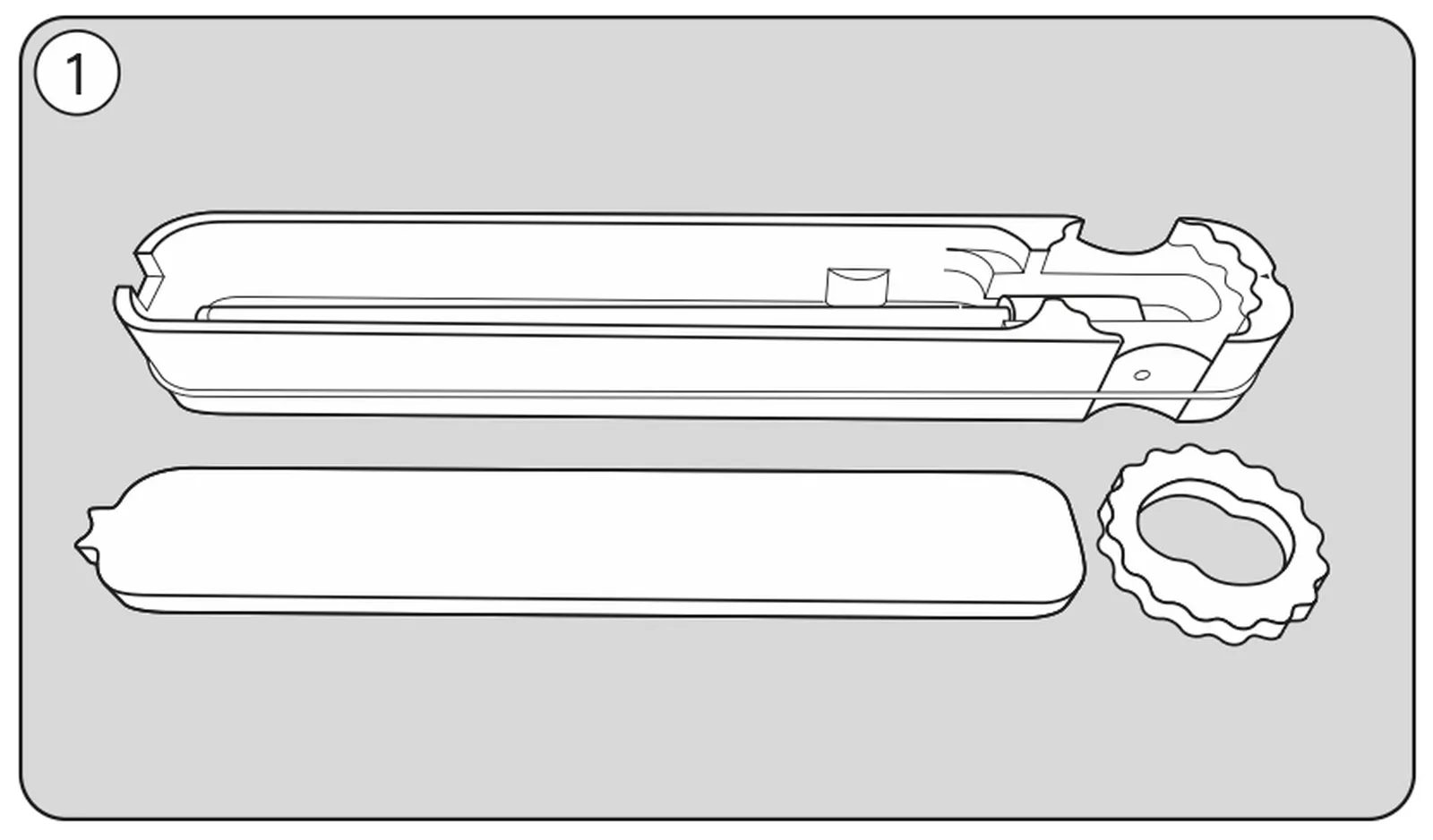
Move the elastic band to one side of the case.
Remove the cover and adjust the wheel.
Step Two:
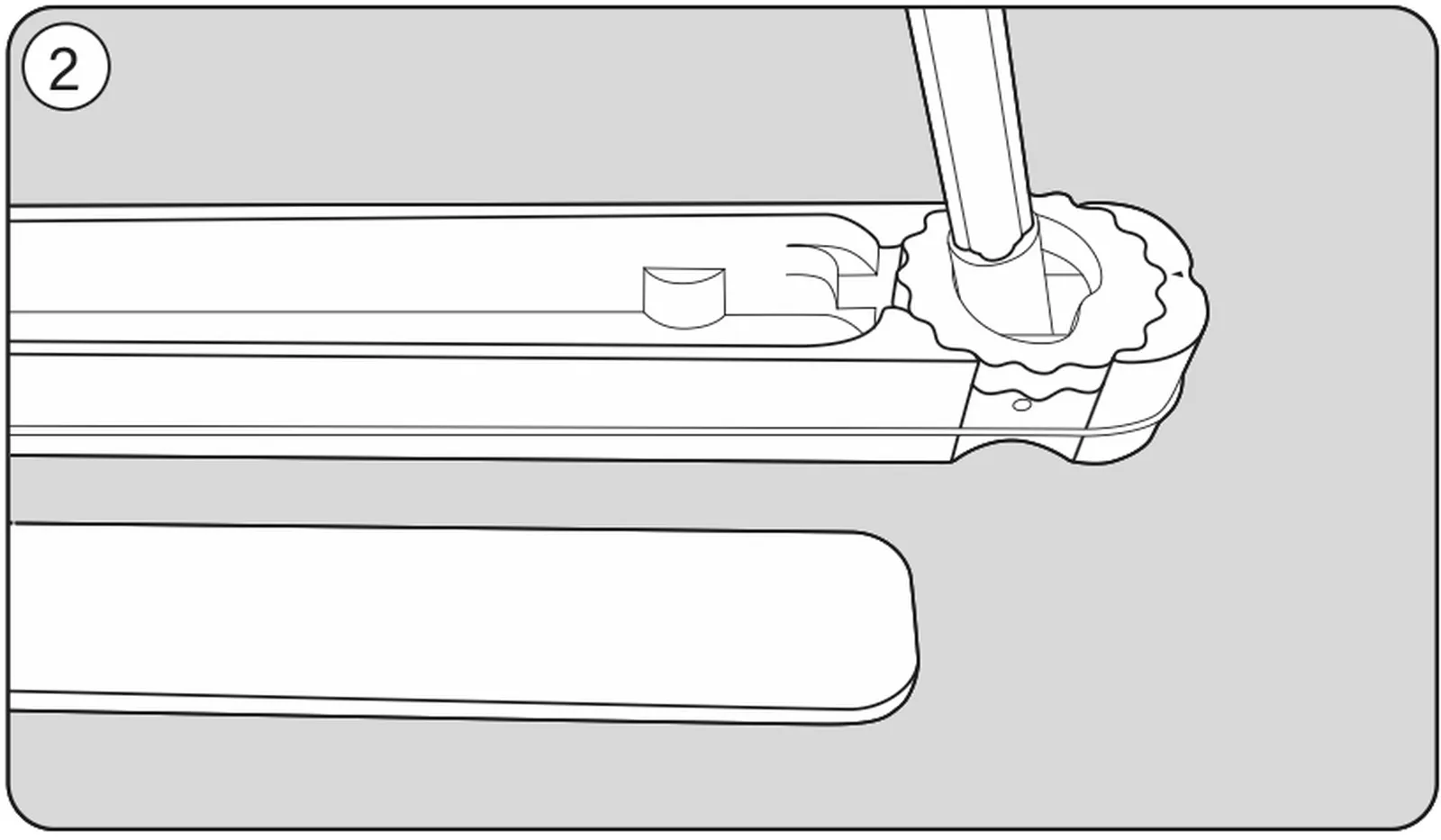
Lift the rod vertically and install the wheel so that the triangle on the body points to the sharpening angle you have chosen (you can find recommended sharpening angles on the lid).
Step Three:
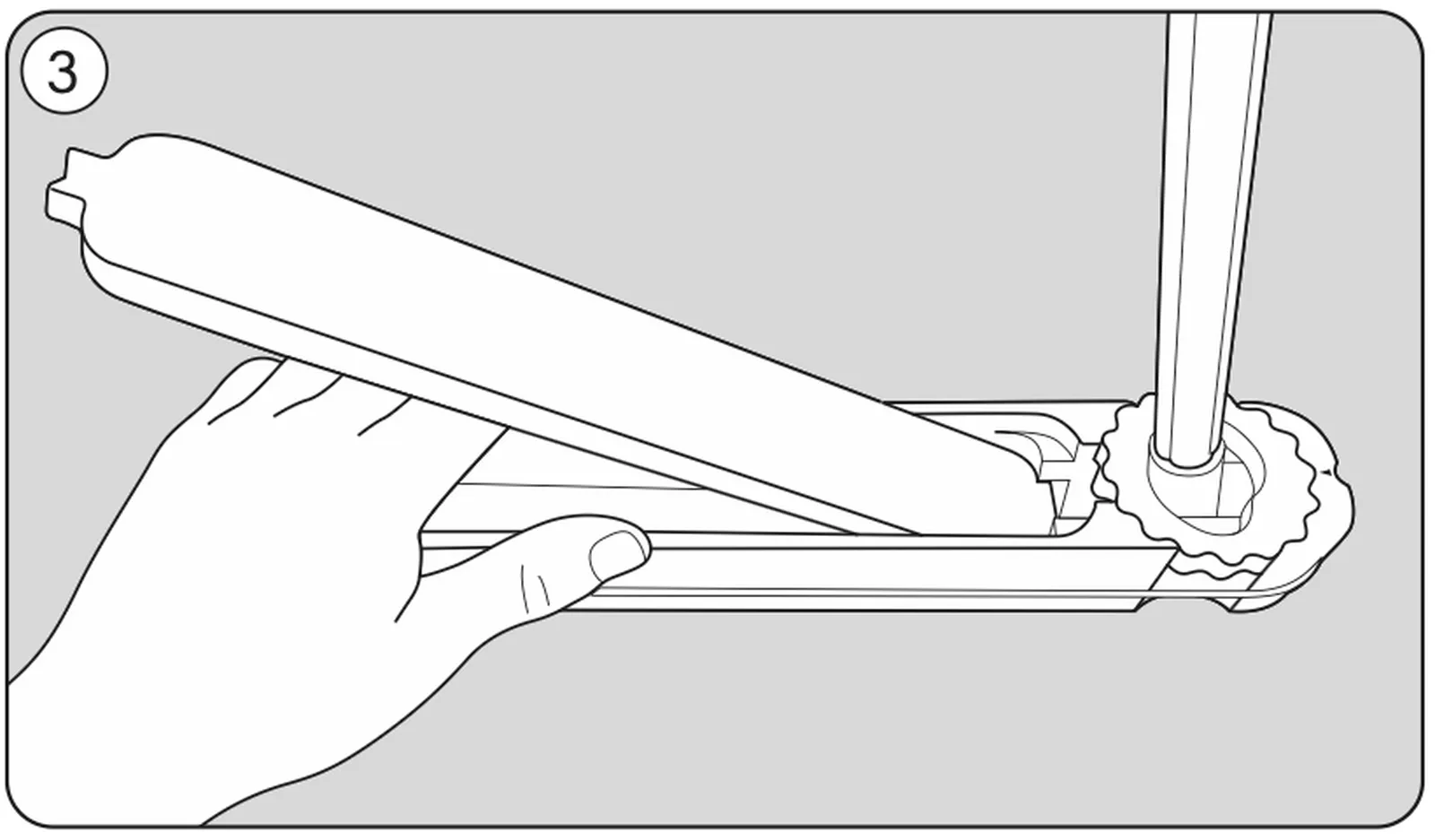
Place the lid in the hand protection position.
Step Four:
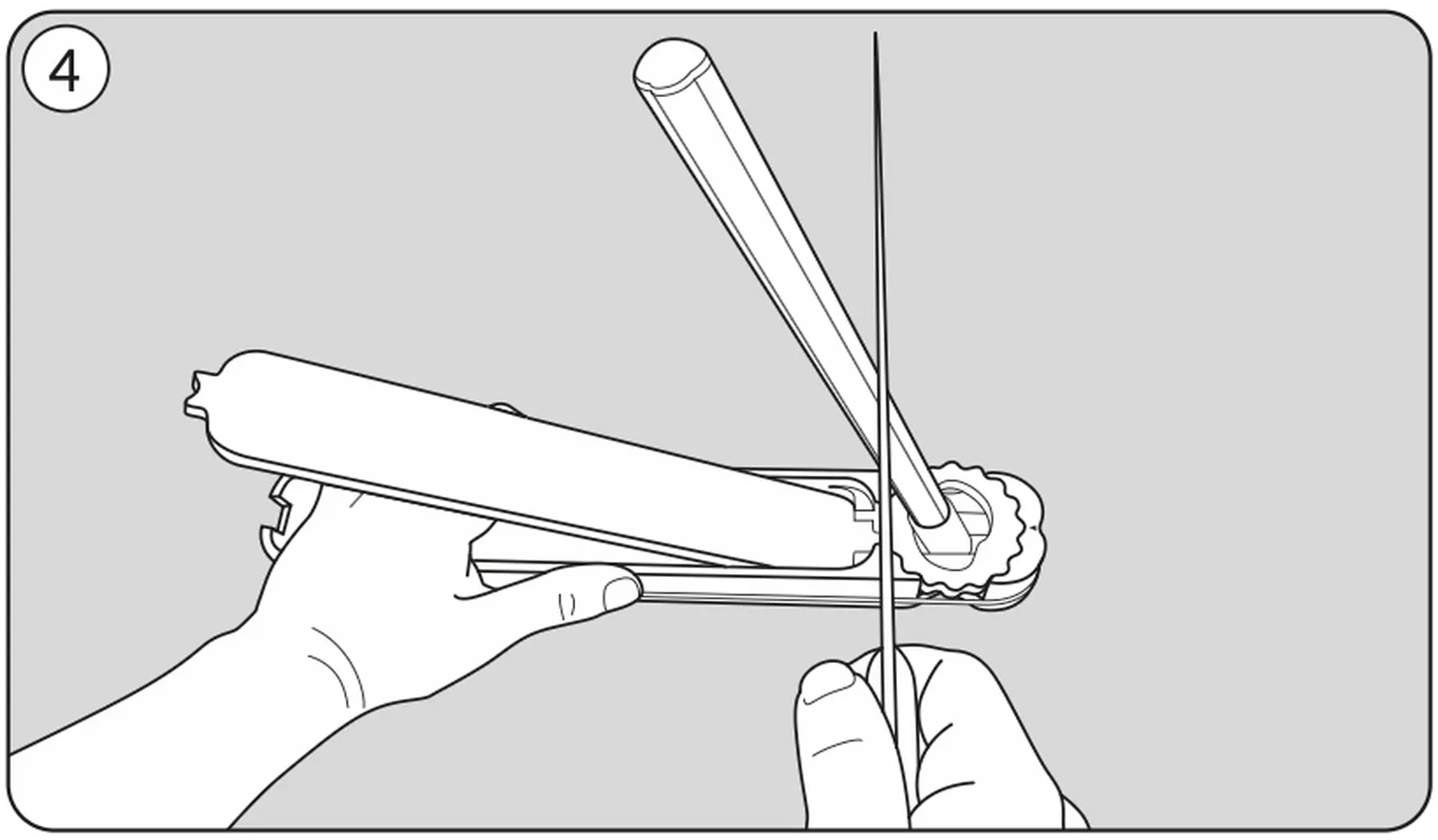
Holding the knife vertically, make 5 strokes with the blade along the blue rod on the left starting from the heel of the knife to the tip. Repeat the 5 strokes on the right. Make 4 strokes on the left and 4 strokes on the right. Each time, reduce the number of strokes on each side until you reach one. Make a single movement, changing sides of the blade with minimal pressure on the rod several times. If your knife is not sharp enough, repeat the steps from the beginning.
Speed up the sharpening process (for completely dull knives)
If the knife is very dull, you can speed up the sharpening process on the blue rod by using both downward and upward motions without lifting the blade from the rod. You can also apply more pressure and focus on the dullest parts of the blade (usually the areas that come into contact with the cutting board most often, especially the belly of the knife).
To speed up the sharpening process, you can also occasionally rotate the blue rod around its axis. This allows the blade to contact a cleaner, less clogged section of the rod, helping it sharpen more aggressively and efficiently.
Sharpen until a burr forms along one side of the blade, then switch sides and continue sharpening until a burr forms along the opposite side.
Try to make approximately the same number of strokes on both sides of the blade to maintain symmetry of the cutting edge.
After this, remove the burr by making several passes on each side, constantly alternating sides and gradually reducing the pressure to a minimum.
In the areas where the blade contacts the rod, the surface gradually becomes clogged with metal particles, causing the rod to sharpen more slowly. For this reason, it is recommended to clean the rod from time to time.
Any common kitchen cleaning detergent can be used for cleaning. Apply the cleaner to the rough side of a kitchen sponge and scrub the rod in the areas where gray marks have appeared.
Frequently asked questions
Why do our sharpeners provide long-lasting sharpness?
Our sharpeners ensure long-lasting edge retention because they address all key sharpening factors. First, you can choose the optimal grit: around 800 grit is sufficient for softer steels, while 3000 grit or higher is ideal for harder, premium steels. Second, the design allows you to quickly switch the side of the knife being sharpened and adjust the pressure, ensuring complete burr removal and preventing the edge from dulling quickly. Finally, the sharpeners create scratches at about a 45° angle to the edge, which increases its strength and maintains cutting aggressiveness.
Which sharpener should I choose for my knives?
For kitchen knives with thin blades, especially flexible knives such as fillet knives, we recommend using the Guided Rods Sharpener, as it locks in the sharpening angle and prevents the blade from bending at the point of contact with the rod. The WAVE sharpener is more versatile: it allows sharpening knives of any thickness, from kitchen to hunting knives, and offers a wider range of sharpening angles. Additionally, because it allows both upward and downward strokes, it provides faster sharpening.
Won’t it be difficult to hold the knife vertically using the WAVE sharpener?
The innate sense of verticality is a natural ability to intuitively feel where “up” and “down” are. It relies on the combined work of the vestibular system, vision, and proprioception, which inform the brain about body position and gravity. For example, when you hold your hand horizontally, you sense it lying parallel to the ground; when you turn it vertically, you feel it standing upright – even with your eyes closed.
How quickly do ceramic rods wear out?
Ceramic rods are virtually wear-resistant and require only cleaning. If you notice that your ceramic rod has started sharpening more slowly, simply clean it thoroughly. Dishwashing detergent and a kitchen sponge – particularly the abrasive side – or cleaning wipes are suitable for this purpose.
What sharpening angle should I choose for my knife?
The guide for selecting the correct angle for a specific knife is engraved on the lid of the WAVE sharpener. The most important thing is to use the exact same angle for each knife.
Do ceramic rods need to be cleaned? If so, how?
During sharpening, ceramic rods become contaminated with metal particles and therefore require regular cleaning. It is advisable to clean the ceramic rod after several sharpening sessions. Dishwashing detergents and cleaning wipes are suitable for this purpose. For example, Pink Stuff wipes work very well for cleaning the rod’s surface. If using detergent and water, apply the detergent to the rough side of a sponge and clean the rod under running water.
What knives and tools can be sharpened with the WAVE sharpener?
The WAVE sharpener is designed to handle a wide variety of cutting tools, with a focus on knives of all kinds – from kitchen to hunting knives. Its versatility extends to blades with curved profiles. Thanks to the adjustable sharpening angles, the WAVE sharpener is also ideal for maintaining tools such as machetes and garden cutting instruments.
How do I know what sharpening angle my knife has?
If you are unsure of your knife’s sharpening angle, you can use the following method: mark the cutting edge of your knife with a marker, then run the knife along the WAVE sharpener rod and observe where the rod removes the marker. This will show whether your angle is larger or smaller than the one set on the WAVE sharpener. When you achieve the correct angle, the marker will be removed evenly across the entire cutting edge.
Which rod should I use for sharpening and which one for honing?
The coarse 800-grit blue rod is highly abrasive and removes more material, making it ideal for initial sharpening. For honing and achieving a finer edge, the 3000-grit white rod is recommended.
How to achieve the highest possible sharpness?
Two key factors determine the sharpness of a cutting edge: the cleanliness of its surface and the absence of a burr. Achieving a cleaner and smoother surface is ensured by using abrasives with a finer grain size, which helps minimize micro-irregularities and improve the quality of the finish. Effective burr removal is facilitated by alternating the sides during sharpening and reducing the applied pressure, which prevents burr reformation and ensures a stable cutting edge. To achieve maximum edge sharpness in practice, use a 3000-grit white sharpening rod, frequently alternating the sharpening sides and applying minimal pressure to the rod.
Are the rods interchangeable between Premium and Professional models?
The Wave Premium sharpener is compatible with round rods, while the Wave Professional sharpener cannot accommodate the double oval rod.
How can I speed up the sharpening process with the WAVE sharpener?
You can speed up the sharpening process by using an alternative technique with the WAVE sharpener. In addition to standard up-and-down strokes, you can also use up-and-down-up movements.
Begin by sharpening one side of the blade, then switch to the other, keeping the number of strokes on each side roughly equal.
This method removes metal more efficiently and helps you achieve faster results. We recommend using the blue rod for this step.
At the end, be sure to make several standard up-and-down strokes, alternating sides each time, to remove the burr.
Are rods from Guided Sharpeners compatible with the Wave sharpener case?
Yes, they are. You can use Guided Sharpener rods by removing the guide and inserting them into the holder with the handle facing up.