
Delivery within 3-5 business days
How To Sharpen Topics:
Sharpening Basics
Knife Maintenance
Choosing a Sharpener
Japanese Knives
Common Mistakes
FAQ
Sharpening Basics
Knife Maintenance
Choosing a Sharpener
Japanese Knives
Common Mistakes
FAQ
How to Sharpen
Sharpening Basics
This comprehensive knife sharpening guide explains everything you need to know to sharpen a knife properly. You’ll learn how a cutting edge works, how burrs form and are removed, how to choose the correct sharpening angle, how honing differs from sharpening, how to select the best sharpening method for your needs, and how to keep your knives sharp for longer.
Sharpening process
Sharpening is the process of removing metal from the cutting edge at a specific angle, but the term is also commonly used to describe the overall restoration of a knife’s cutting ability. Because of this, sharpening can also include stages such as honing and stropping.
1. Sharpening – forming a new cutting edge.
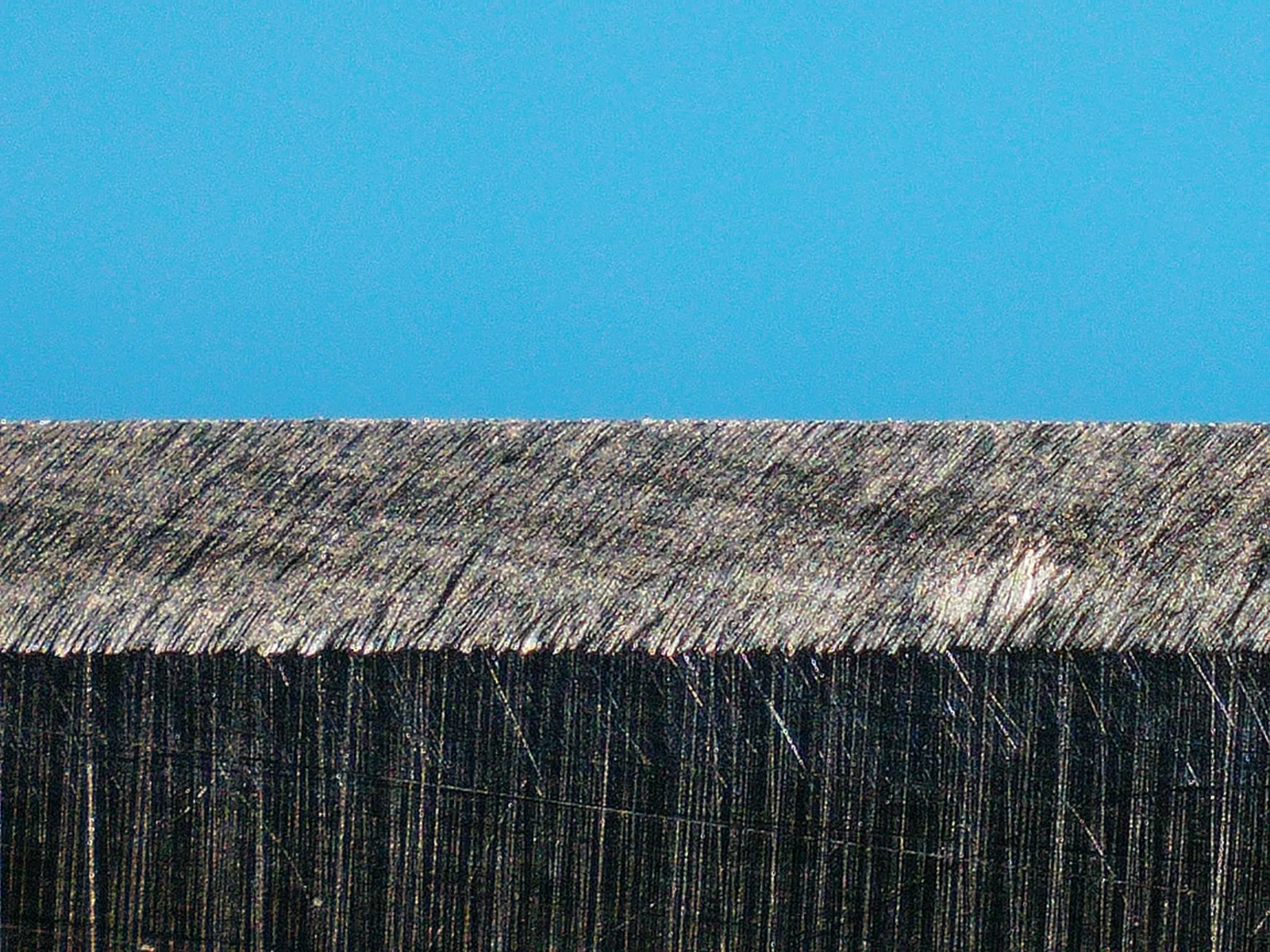
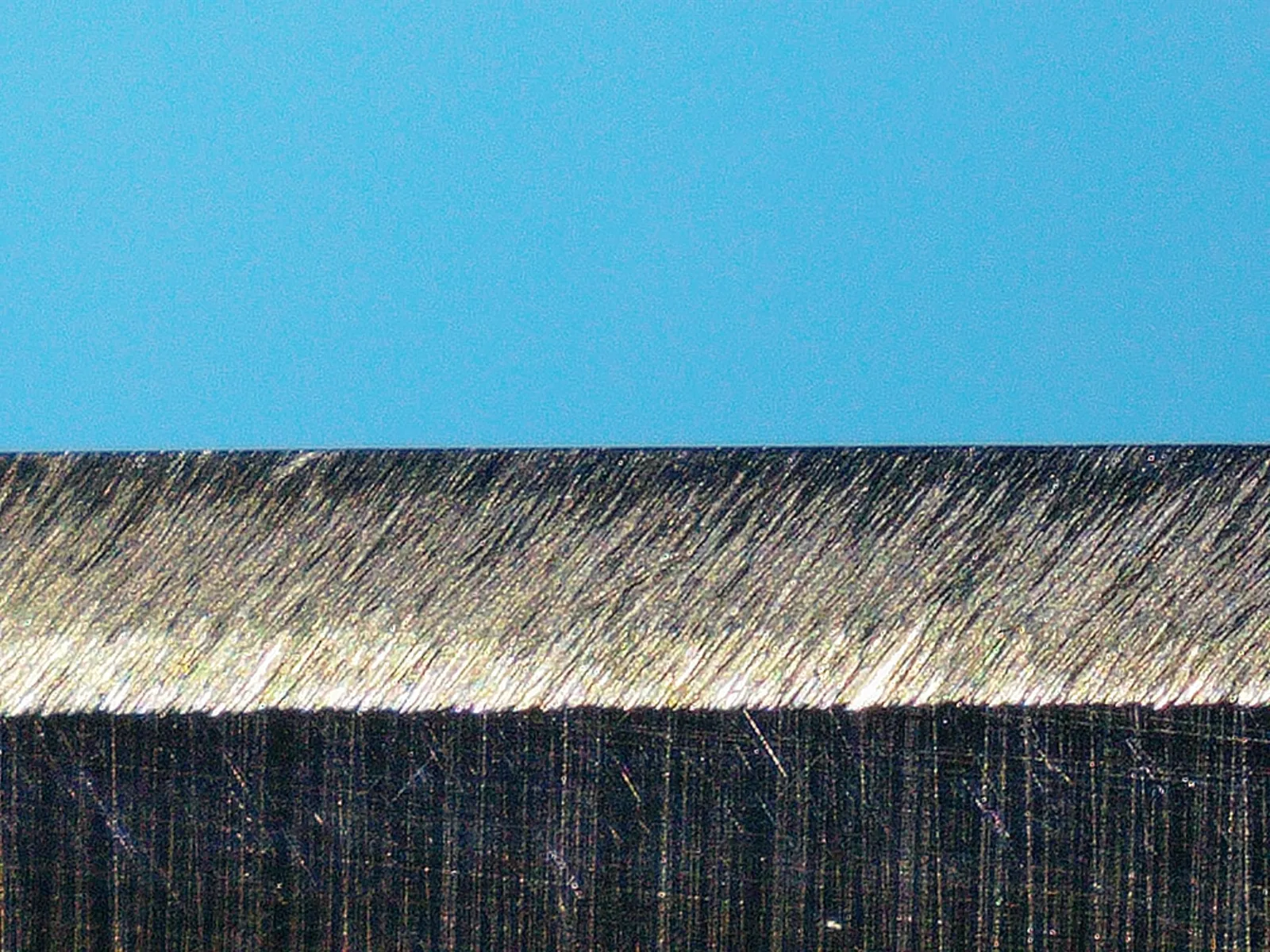
2. Honing – refining the edge and removing the burr. Honing can also refer to maintaining a knife’s sharpness during regular use, when the damage to the edge is still minimal.
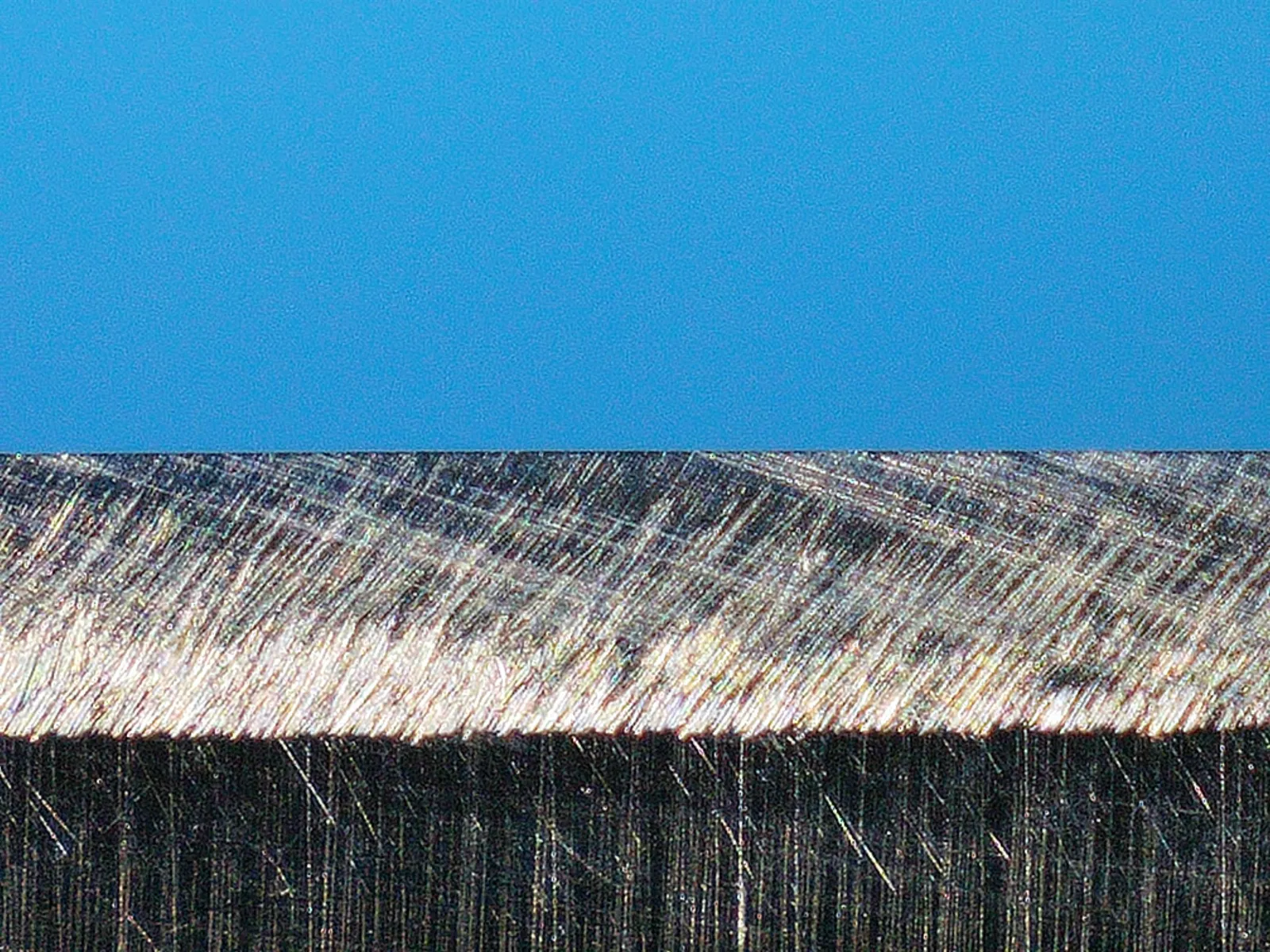
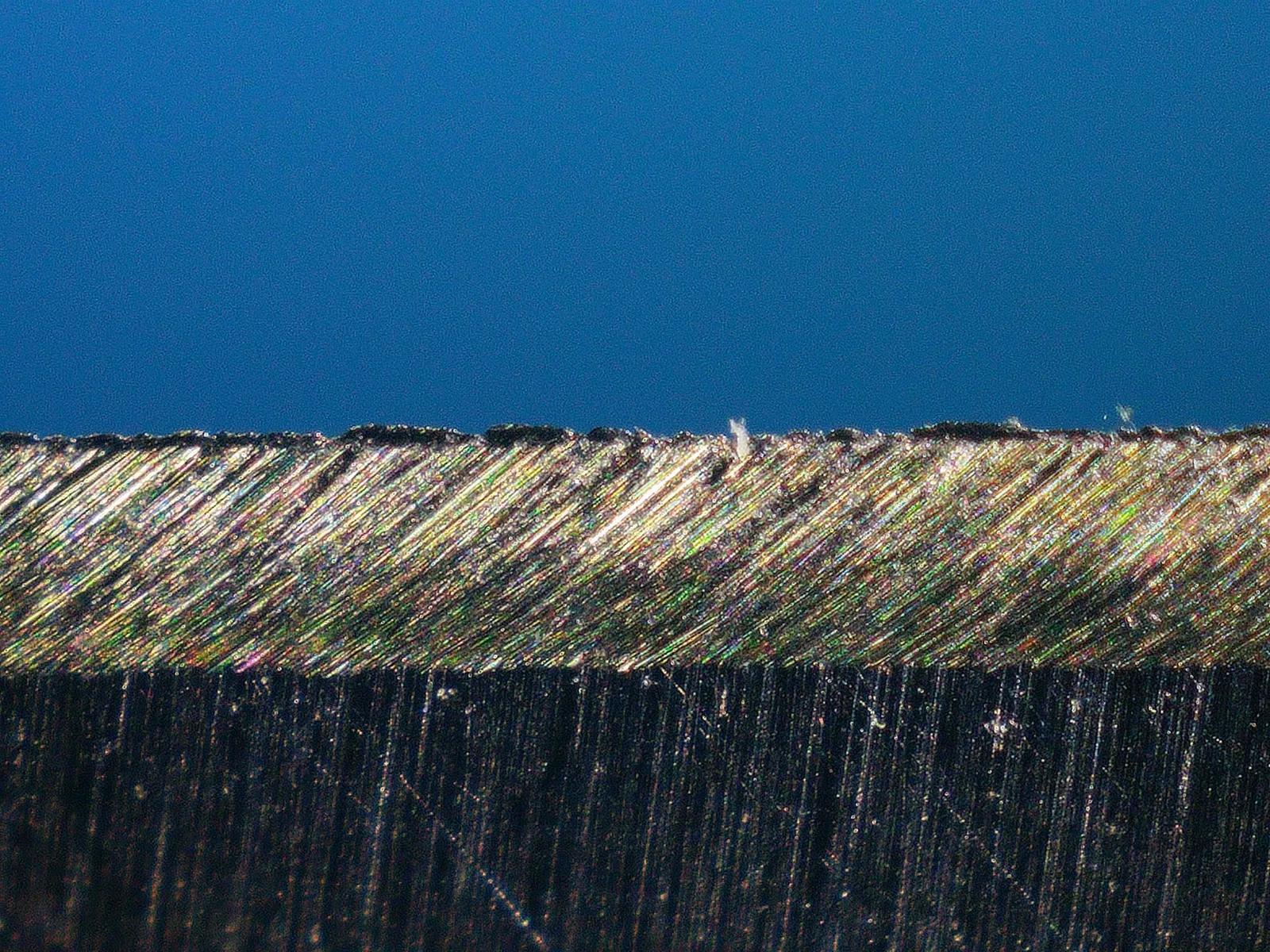
3. Stropping – removing micro burrs and polishing the cutting edge. Stropping is not always necessary, especially for knives made from lower- or medium-grade steels.
The first stage of sharpening involves removing damage from the cutting edge and forming a burr along the entire length of the edge.
The second stage involves reducing the depth of the scratches left on the cutting edge by the coarse abrasive and removing the burr.
Burr removal
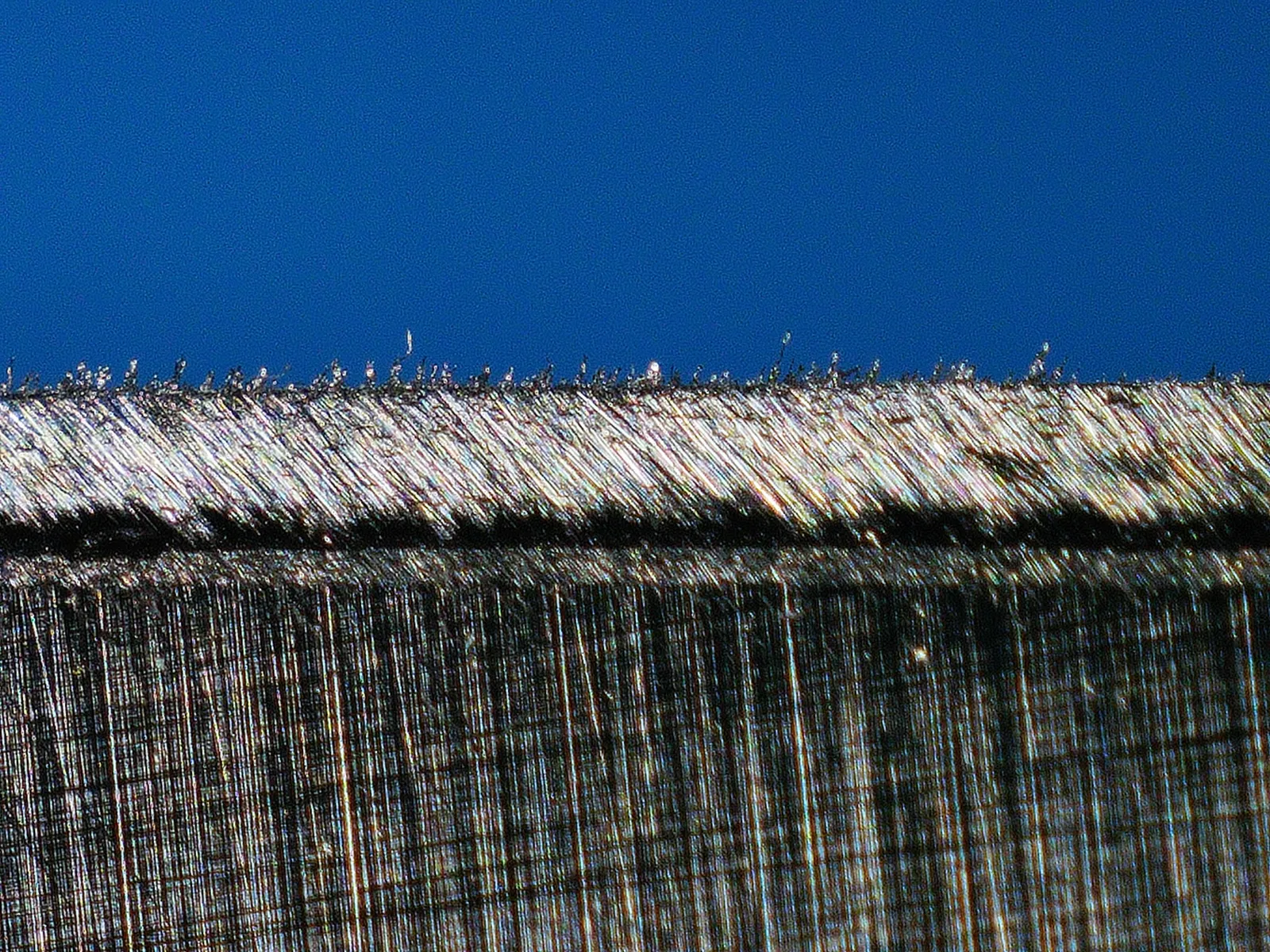
A burr is a thin strip of deformed metal that forms on the edge during sharpening. It appears when the abrasive reaches the apex of the cutting edge and pushes a small amount of steel to the opposite side.
To remove the burr, switch sides with each pass while gradually reducing pressure on the abrasive.
The choice of the appropriate abrasive depends primarily on the task at hand. If the knife does not have significant damage, such as chips or rolled edges, there is no need to use a coarse abrasive. In such cases, the cutting edge can simply be restored using a medium or fine abrasive.
How to Choose the Right Sharpening Angle
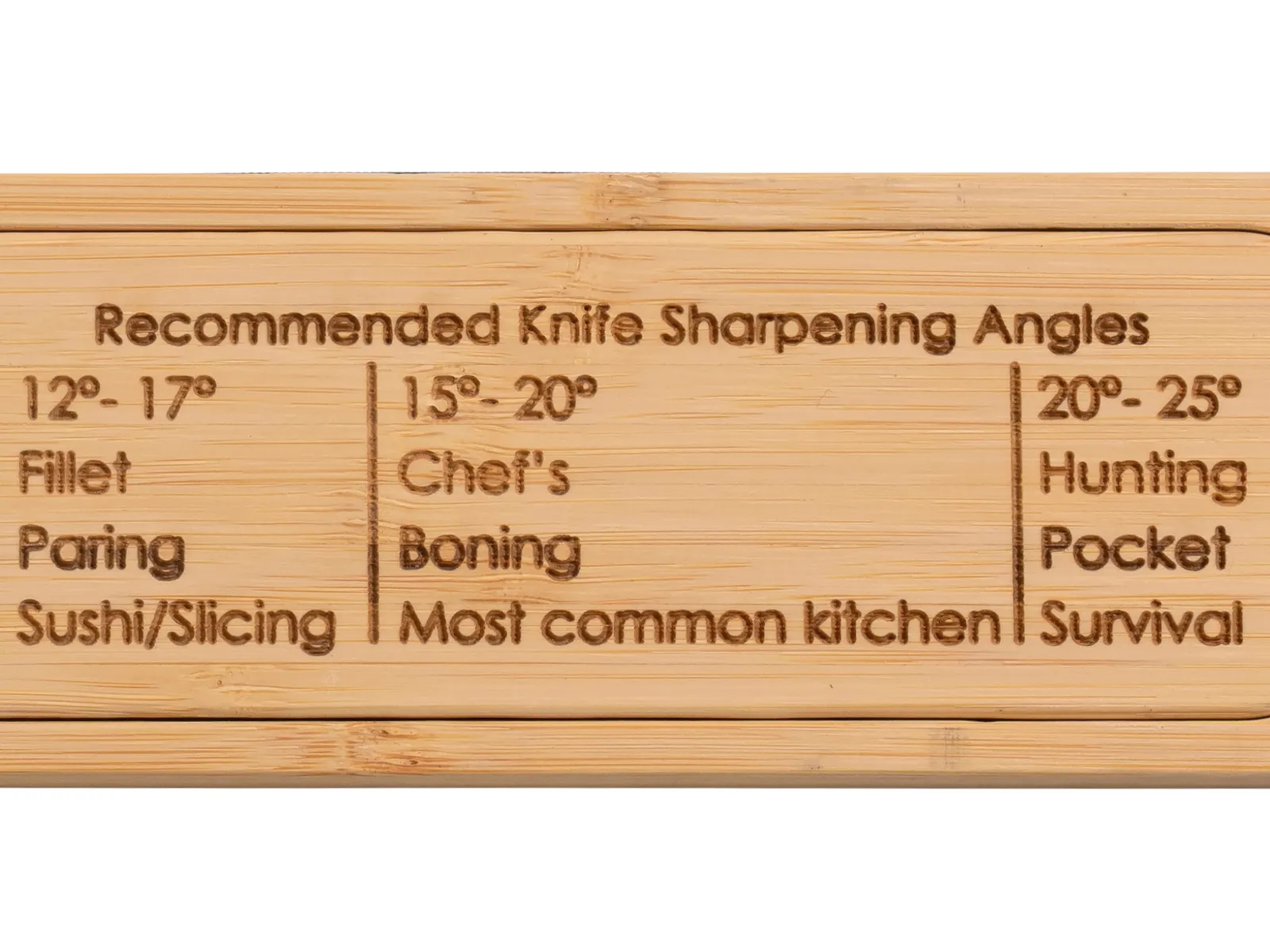
The choice of sharpening angle depends primarily on the intended use of the knife. It may also vary depending on the quality and hardness of the steel. For example, a soft steel European chef’s knife can be sharpened at 20 degrees per side, while a Japanese chef’s knife made from harder steel may be sharpened at 15 degrees per side. Here you will find a table of recommended sharpening angles for different types of knives.
Recommended Knife Sharpening Angles
12°–17°
Fillet
Paring
Sushi / Slicing
15°–20°
Chef’s
Boning
Most Kitchen Knives
20°–25°
Hunting
Pocket
Survival
The easiest way to maintain a consistent sharpening angle is to use a sharpening system with adjustable angle settings.
How to Match an Existing Sharpening Angle
There is a fairly simple way to match the existing sharpening angle of a knife. Apply a marker to both sides of the cutting edge.
Using the sharpener, make a few passes along the cutting edge and observe where the abrasive removes the marker. By adjusting the angle on your sharpener accordingly, you will be able to match the angle that was previously set on your knife.
2. Knife Maintenance
Why Is Honing Important?
Regular honing means a longer life for your knife.
If a knife is maintained regularly using a fine abrasive, it will last much longer than a knife that is sharpened only occasionally, after it has already lost its cutting ability.
This happens because when small defects appear on the cutting edge and are left uncorrected, they tend to grow during use. Since a dull knife does not pass easily through the material being cut, more force must be applied. As a result, greater stress is transferred to the cutting edge and the cutting board, which accelerates edge deterioration.
To repair major damage, a large amount of metal must be removed, which makes the cutting edge thicker and reduces the knife’s ability to glide easily through hard foods. It also makes the knife less comfortable to use overall.
On the other hand, if small defects are corrected at an early stage, a fine abrasive is usually sufficient. The knife continues to cut easily and requires much less force during use. In addition, areas of edge degradation that are addressed in time do not spread nearly as quickly.
How Often Should Knives Be Honed?
The required frequency of honing depends on several factors, such as how intensively the knife is used, the quality of the knife steel and its heat treatment, as well as the cutting technique and the quality of the cutting board.
To help your knife stay sharp longer, avoid cutting frozen foods and bones, and always use a quality cutting board.
The easiest way to tell whether your cutting board is knife-friendly is to look at its surface. If the board shows signs of knife use, such as cut marks, it means the blade is dulling less than it would on a board that always looks brand new. In that case, the surface is likely so hard that the knife cannot cut into it, causing the edge itself to wear down more quickly.
It takes only a single instance of cutting food on a plate to dull the knife in the areas where the edge comes into contact with the plate’s surface.
Under normal home use, a knife made from quality steel typically requires honing no more than once a month, and possibly even less often. Knives made from softer steel, however, lose their sharpness much faster and usually require honing approximately once every two weeks or even more frequently.
How to Tell When Your Knife Needs Honing
There are many ways to determine whether your knife needs honing. Here are some of them.
Plastic or paper package test
Very often, before preparing food, we need to open packaging. If the knife cuts the package cleanly and effortlessly, it also likely does not need honing.
Paper cutting test
If the knife cuts through paper easily and cleanly along the entire length of the cutting edge, it usually does not need honing.
Visual inspection
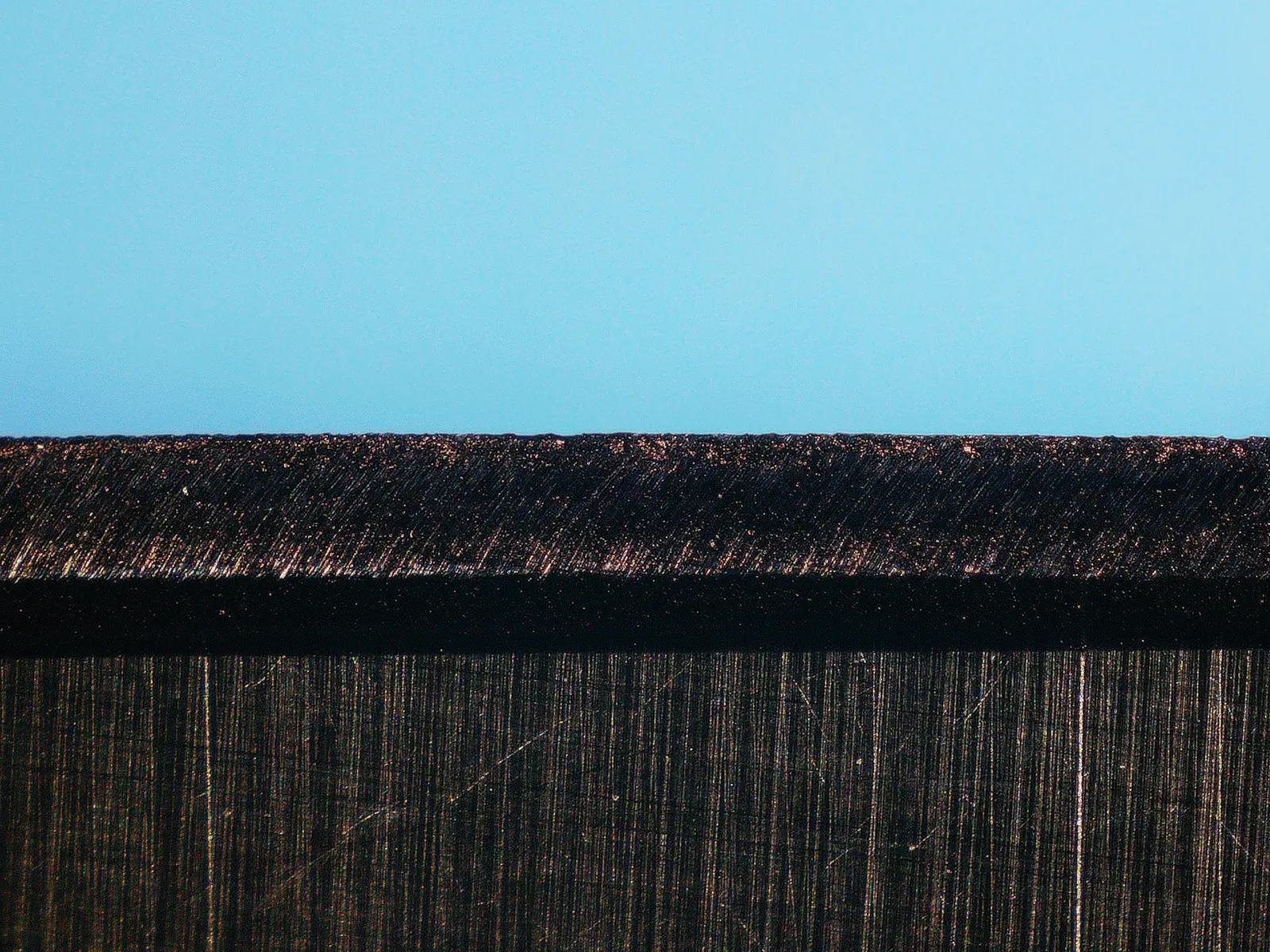
Hold the knife with the cutting edge facing upward under good lighting and look at the edge itself. A sharp edge without damage will appear as an almost invisible line between the bevels, with no bright spots or reflected lines visible on it.
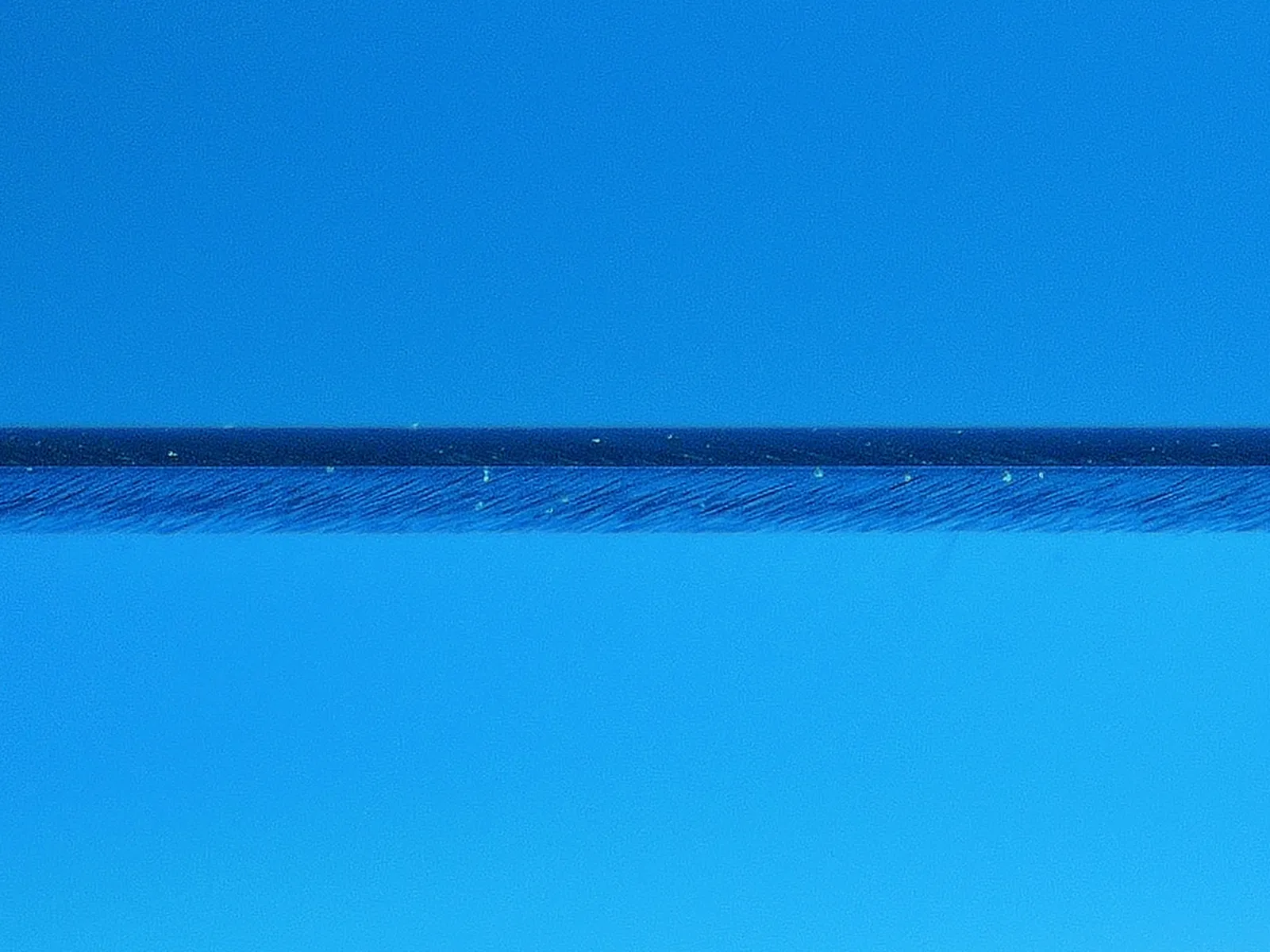
Any damage, such as rolled sections or chips, will reflect light and appear as bright spots or shiny lines.
The first signs of dullness usually appear on the belly of the blade, where the cutting edge contacts the cutting board most often, so pay special attention to this area during inspection.

How to Tell When Your Knife Needs Sharpening
A heavily dull knife can no longer be restored by honing alone. There are several signs that indicate a knife has become severely dull.
Noticeable loss of cutting performance
Severe dullness is also very noticeable during food preparation. The knife will slide on surfaces such as tomato skin and will not cut cleanly through food along the entire edge, requiring a back-and-forth sawing motion on the cutting board.
Fails the paper cutting test completely
A heavily dull knife that requires sharpening will not cut paper at all. It will tear it instead.
Visual inspection
Visually, the damage is usually easy to notice, as large sections of the cutting edge have already degraded.

Edge retention & Scratch pattern
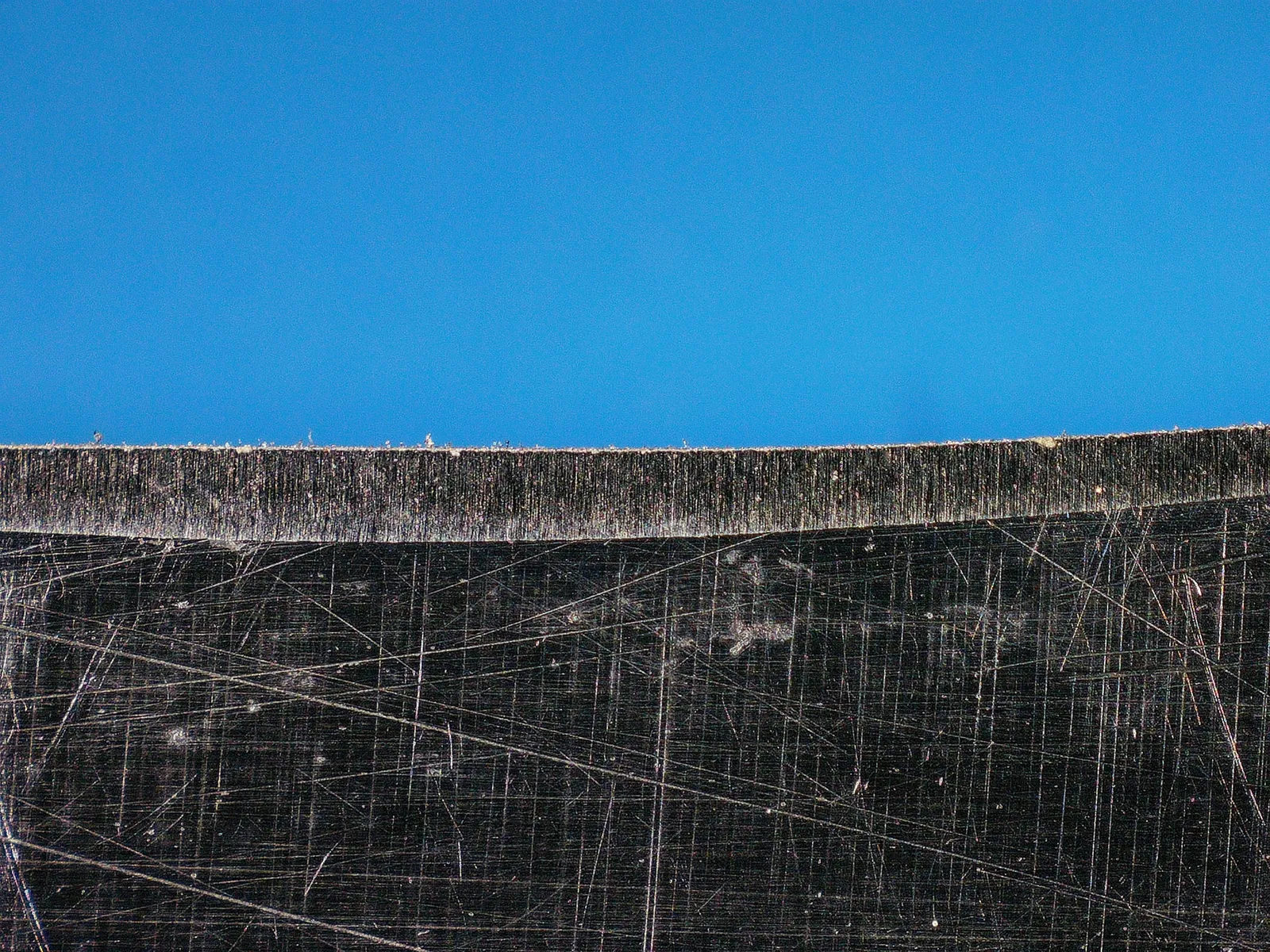
Knife edge retention depends not only on the quality of the steel and its heat treatment, but also to a large extent on the quality of the sharpening itself. Assuming the correct abrasive has been chosen, the edge has been refined to the appropriate level of finish, and the burr has been properly removed, another important factor comes into play – scratch pattern.
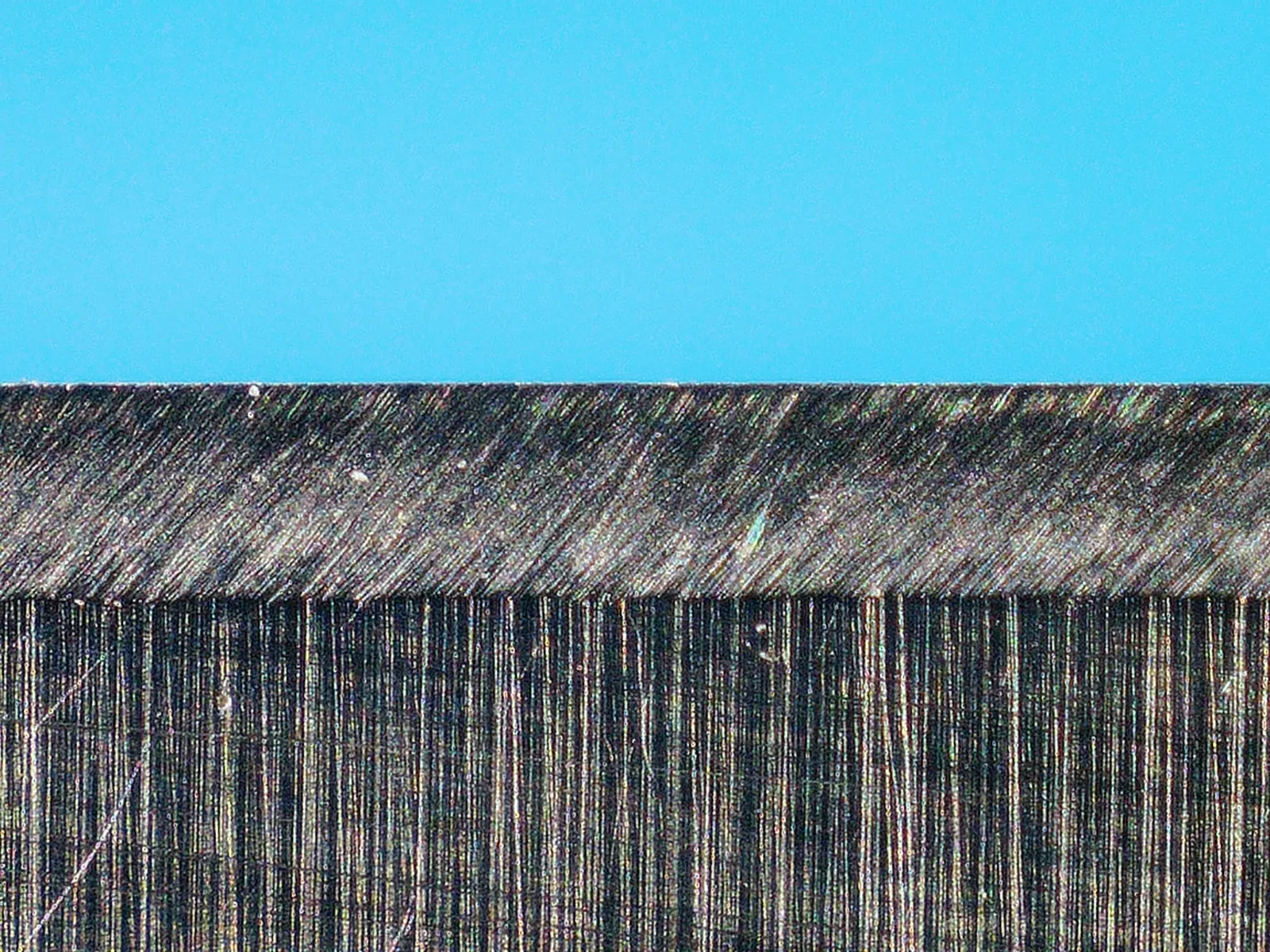
The direction of the scratches left by the abrasive has a significant effect on edge retention. If the scratches run parallel to the cutting edge, they weaken it and cause the knife to lose sharpness more quickly.
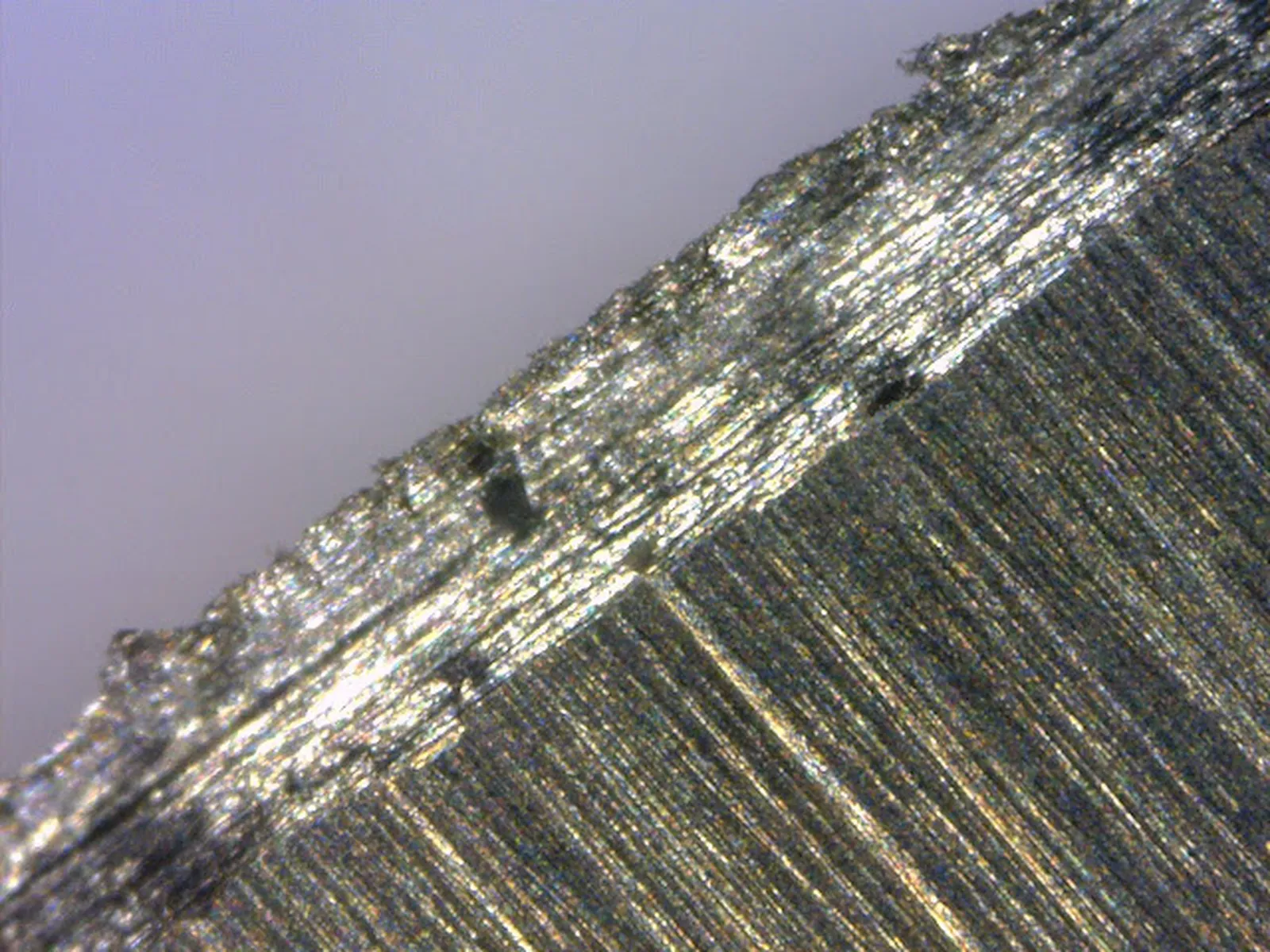
For good edge retention and cutting aggression (bite), the scratch pattern should run at an angle to the cutting edge – typically between 45 and 90 degrees. This helps the knife maintain aggressive cutting performance while reducing the rate of dulling.
3. Choosing a Sharpener
How to Choose the Best Knife Sharpener
There is no single sharpening method that is best for everyone. The ideal choice depends on the type of knives you own, the level of sharpness you expect, and how much time you are willing to spend sharpening. Below we compare the most common sharpening methods and their strengths and weaknesses.
The choice of sharpener depends on the knives you plan to sharpen. For example, if you mainly sharpen kitchen knives and the sharpener will stay at home, it should be comfortable for sharpening long blades and does not need to be compact or lightweight.
On the other hand, if you plan to use the sharpener outdoors, compact size and low weight become much more important.
Another important factor is the type of steel used in the knives you plan to sharpen. For ordinary stainless steels with relatively low hardness, sharpeners using medium or fairly coarse abrasives are usually sufficient.
For knives made from high-quality, high-hardness steels, it is better to use sharpeners capable of refining the cutting edge to a very high level of sharpness or even a polished finish.
It is also important to consider the versatility of the sharpener. If you plan to sharpen many different types of knives, the sharpener should handle all of them equally well.
For example, long blades or blades with a curved cutting edge have certain sharpening characteristics that not every sharpener handles effectively.
You should also decide how much time you want to spend sharpening, because for some people sharpening is simply a quick way to make their knives cut well again, while for others it is a form of meditation, relaxation, and the pursuit of perfection.
Almost all sharpeners have their own advantages and disadvantages. In general, sharpeners that are very easy to use do not deliver the same level of results as sharpeners that require developed sharpening skills or systems with complex precision mechanisms.
When creating the WAVE sharpener, we aimed to combine ease of use with high-quality sharpening results, while paying special attention to factors such as versatility, user comfort, attractive design, and compact size.
Here, we will look at several popular types of sharpeners, describe their advantages and disadvantages, and compare them with our WAVE sharpener.
Whetstones (sharpening stones)
Whetstones are one of the most popular and versatile sharpening tools, offering many advantages while also requiring a considerable amount of skill and patience.
Pros:
- Highly versatile: suitable for sharpening, refining, repairing, and adjusting bevel geometry (thinning)
- Wide range of abrasives available for different needs and steels
- Capable of achieving very high levels of sharpness
- Full control over the sharpening process
Cons:
- Requires significant skill, experience, and patience
- Whetstones need soaking before use and sharpening process can be messy
- High-quality stones are expensive
- Stones must be periodically flattened to maintain performance
- Difficult to sharpen knives with recurved blade geometry on a flat surface
Brief comparison with the WAVE sharpener:
Unlike whetstones, the WAVE sharpener requires no preparation before use, no soaking, and no advanced sharpening skills. It also makes it much easier to maintain a consistent sharpening angle, which is one of the biggest challenges when sharpening on stones.
At the same time, whetstones remain more versatile for heavy repairs and advanced edge work on severely damaged blades.
Guided systems (Apex-type)
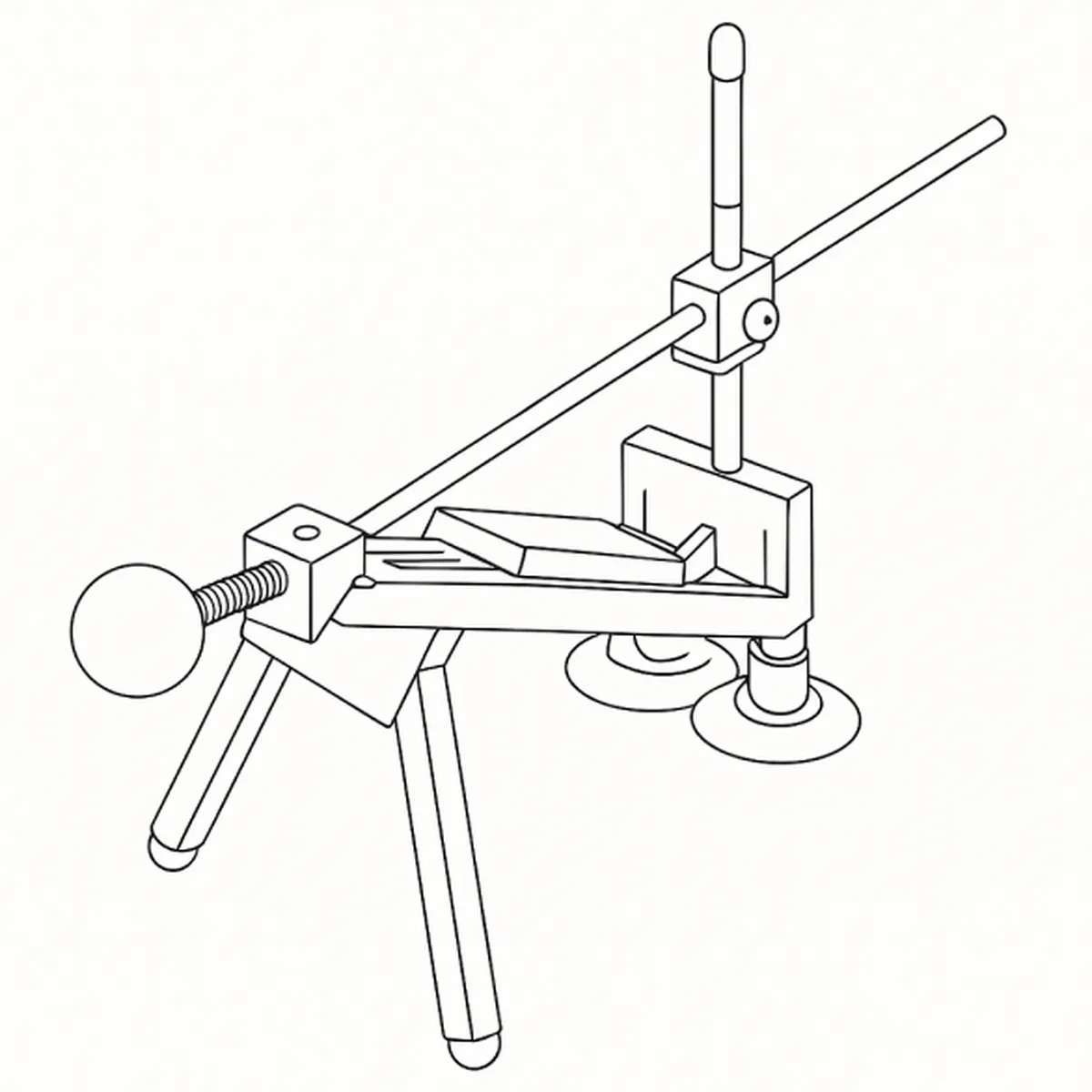
These sharpeners allow for very precise angle adjustment while requiring relatively little skill from the user. However, they are not very convenient for everyday use and are generally better suited for enthusiasts than for the average home user.
Pros:
- Very precise control of the sharpening angle
- Requires relatively little skill to use
- Wide selection of abrasives for a tailored sharpening process
- Cleaner sharpening process compared to water stones
Cons:
- High precision depends on build quality; truly accurate systems are expensive
- Must be secured to a table or be heavy for stable use
- Time-consuming setup (knife clamping and angle adjustment)
- Not ideal for long blades
- Sharpening angle may vary along curved edges
Brief comparison with the WAVE sharpener
Compared to Apex-type guided systems, the WAVE sharpener is significantly faster and more convenient for everyday use. It requires no clamping, no complex setup, and no attachment to a table, making it much more practical for quick touch-ups and regular maintenance.
WAVE is also more compact and portable, while still offering consistent sharpening angles and compatibility with long, curved, and recurved blades.
However, high-end guided systems can provide a higher level of angle precision and are generally better suited for enthusiasts seeking maximum control and highly customized sharpening setups.
Electric sharpeners
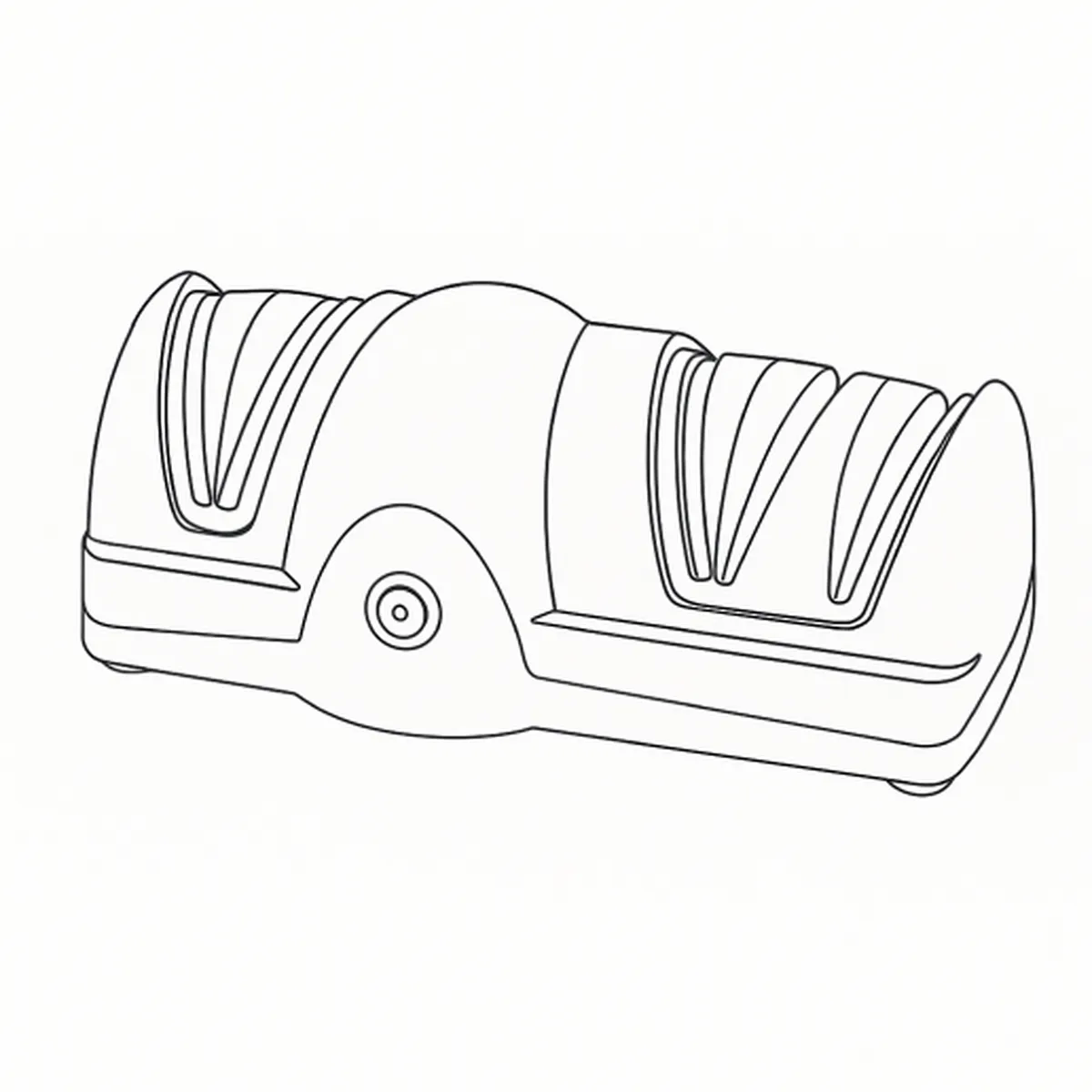
These are among the fastest sharpeners on the market, capable of removing large amounts of metal very quickly. Of course, this mainly applies to high-quality, more expensive models.
Pros:
- Fast and efficient sharpening
- Can sharpen very dull knives
- Simple, “lazy” option with minimal effort required
Cons:
- Removes a large amount of material, risking damage to the knife
- Can irreversibly damage thinner or harder blades (e.g., Japanese knives)
- Requires understanding of abrasives to avoid over-grinding
- Produces a relatively coarse edge; limited achievable sharpness
- Limited range of sharpening angles
- Abrasives wear out and become clogged, requiring replacement
Brief comparison with the WAVE sharpener
Compared to electric sharpeners, the WAVE sharpener removes metal much more gently, helping preserve the life and geometry of the knife over time. It also offers better control and is safer for thin, hard, and high-quality blades, including Japanese knives.
Unlike most electric sharpeners, WAVE allows the user to maintain a more refined edge with less risk of overheating or excessive grinding. It is also quieter, more compact, and does not require electricity.
However, electric sharpeners are generally faster at repairing heavily damaged or extremely dull knives and require even less physical effort from the user.
Roller sharpeners
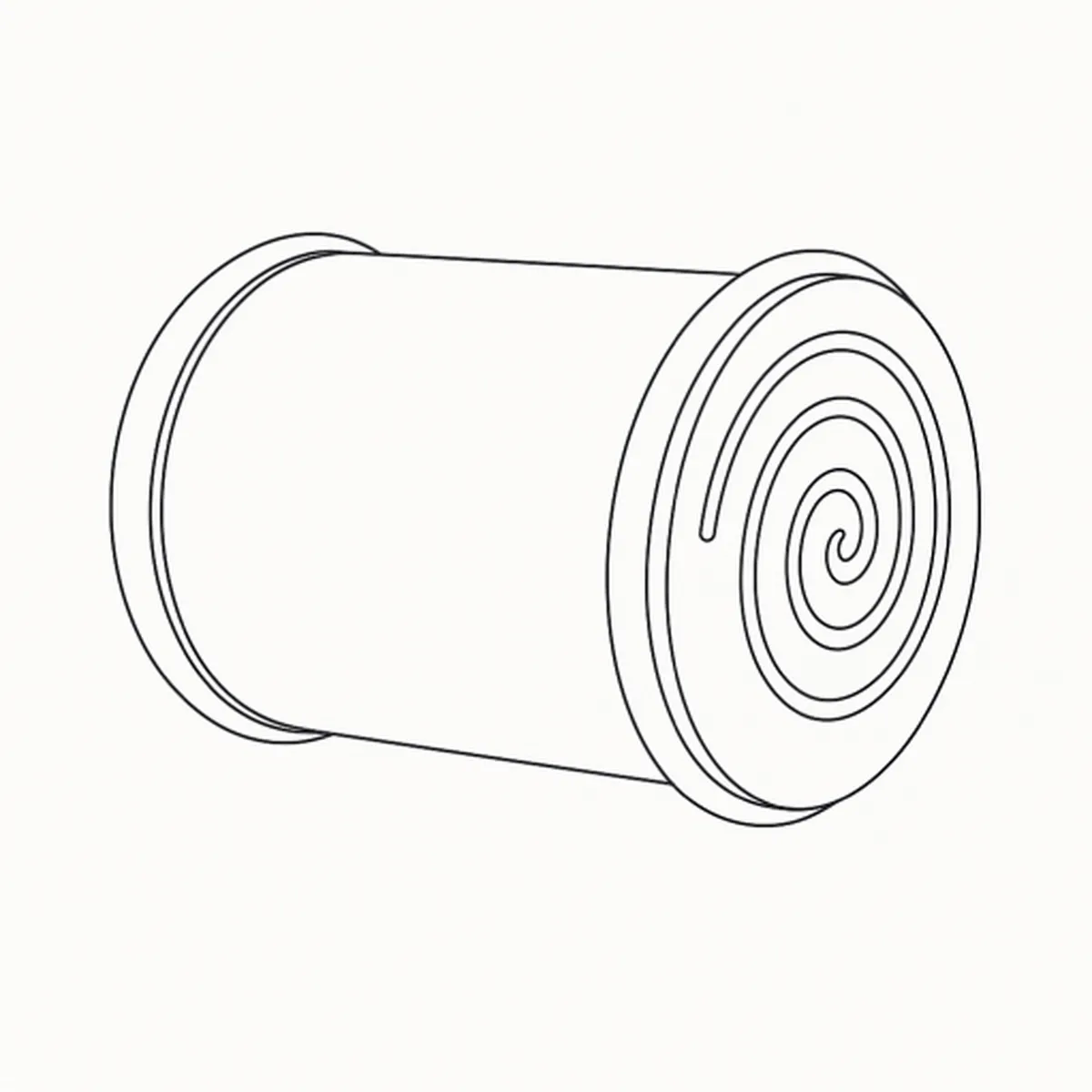
Roller sharpeners have recently become very popular due to their apparent ease of use and attractive design. However, edge retention is often lower than with sharpening systems that create a more controlled scratch pattern.
Pros:
- Compact and attractively designed
- Appears simple to use
- Can be used without extensive setup
Cons:
- Not as easy to use in practice as it seems. Knives with curved edges (belly) require active control when using a roller sharpener.
- Dependent on blade height. On some knives, the cutting edge may sit outside the roller’s working range. If the roller does not reach the edge, the knife cannot be sharpened unless additional support or spacers are used. In addition, narrow blades may not hold securely on magnetic supports.
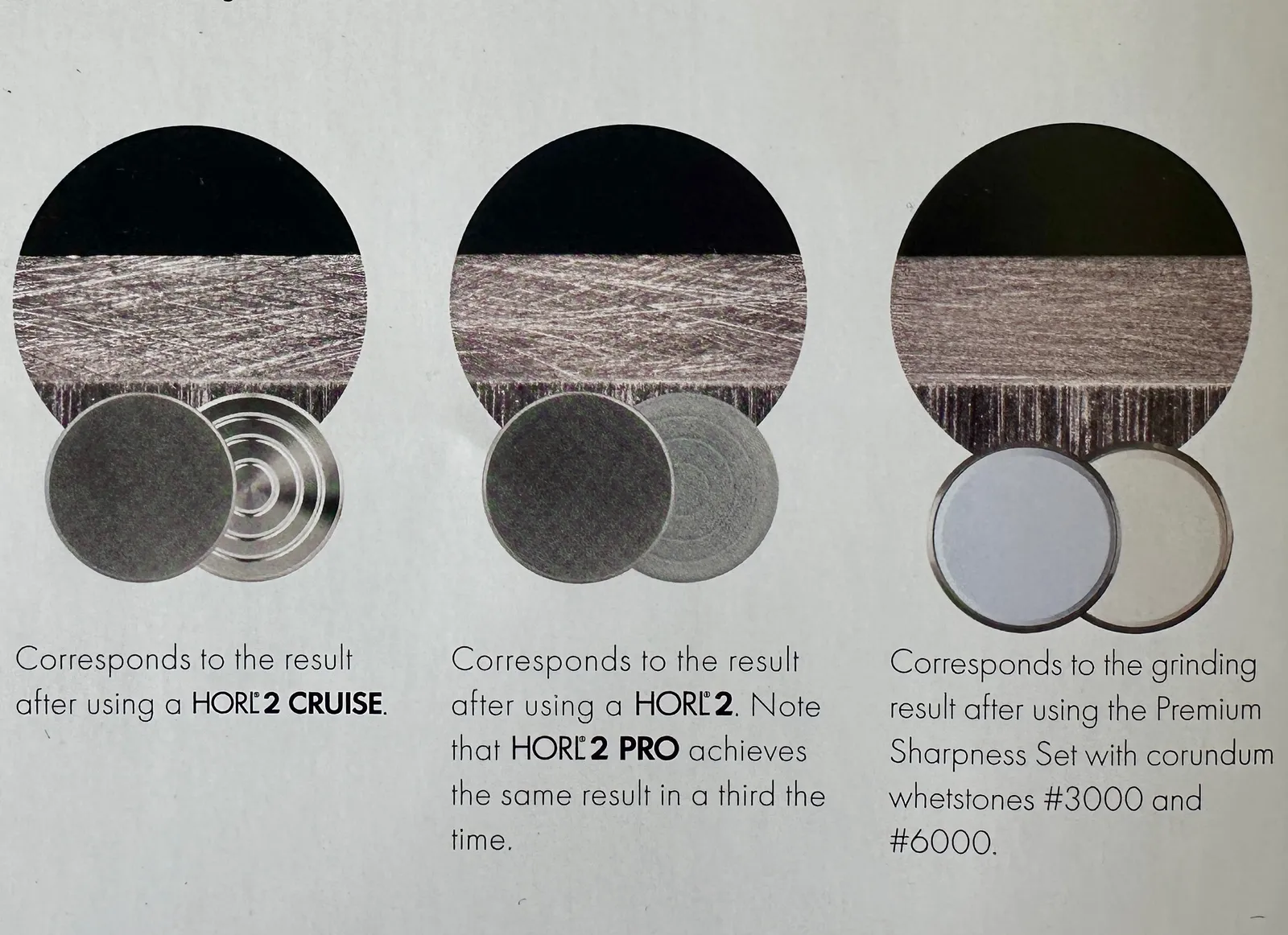
- Produces a chaotic, inconsistent scratch pattern, resulting in reduced edge retention.
- Burr removal is inconvenient and ineffective
- Fixing the knife with the blade facing upward negatively impacts safety.
Brief comparison with the WAVE sharpener
Compared to roller sharpeners, the WAVE sharpener provides more consistent sharpening results and makes burr removal significantly easier. It also creates a more controlled scratch pattern, which helps improve edge stability and edge retention.
Unlike roller sharpeners, WAVE is less dependent on blade geometry and works more comfortably with long blades, curved edges, and recurve blades. It also offers better safety, since the knife is not fixed with the edge facing upward.
At the same time, roller sharpeners may initially appear simpler and more visually attractive to beginners due to their minimalistic design and highly guided motion.
Pull-through sharpeners
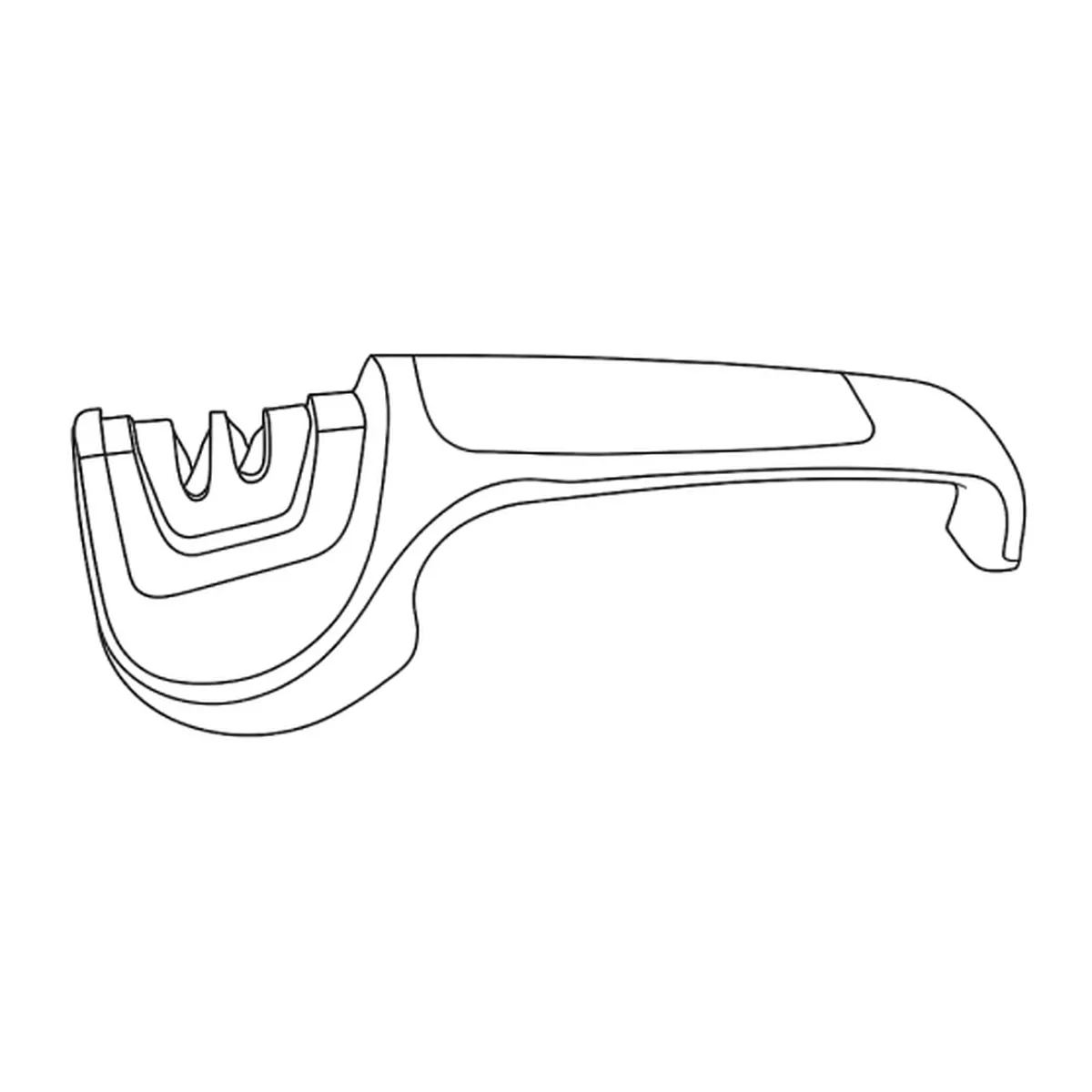
The most popular sharpeners feature various tungsten carbide inserts, ceramic wheels, and diamond-coated plates. The knife is inserted blade-first and sharpened with a sliding motion (back and forth).
Pros:
- Affordable price
- Simple to use (no special skills required)
Cons:
- Designed mainly for soft, inexpensive knives and usually offer a very limited selection of sharpening angles
- Can damage fine edges and thin grinds (e.g., Japanese knives)
- Scratch patterns that run predominantly parallel to the edge are generally associated with lower edge stability and shorter edge retention than scratch patterns that intersect the edge at an angle
- Prolonged use can significantly degrade the cutting edge, potentially requiring major repairs
Brief comparison with the WAVE sharpener
Compared to pull-through sharpeners, the WAVE sharpener is significantly gentler on the cutting edge and provides much better edge retention. Instead of grinding aggressively along the edge, WAVE creates a more controlled scratch pattern that helps maintain cutting performance and edge stability over time.
WAVE is also safer for thin, hard, and high-quality knives, including Japanese blades, which can easily be damaged by pull-through sharpeners. In addition, WAVE offers adjustable sharpening angles and a more refined sharpening process, while most pull-through sharpeners are limited to fixed angles.
However, pull-through sharpeners are usually cheaper and may feel more convenient for users looking for the fastest and simplest sharpening method with minimal effort.
Sharpening steels (rods).
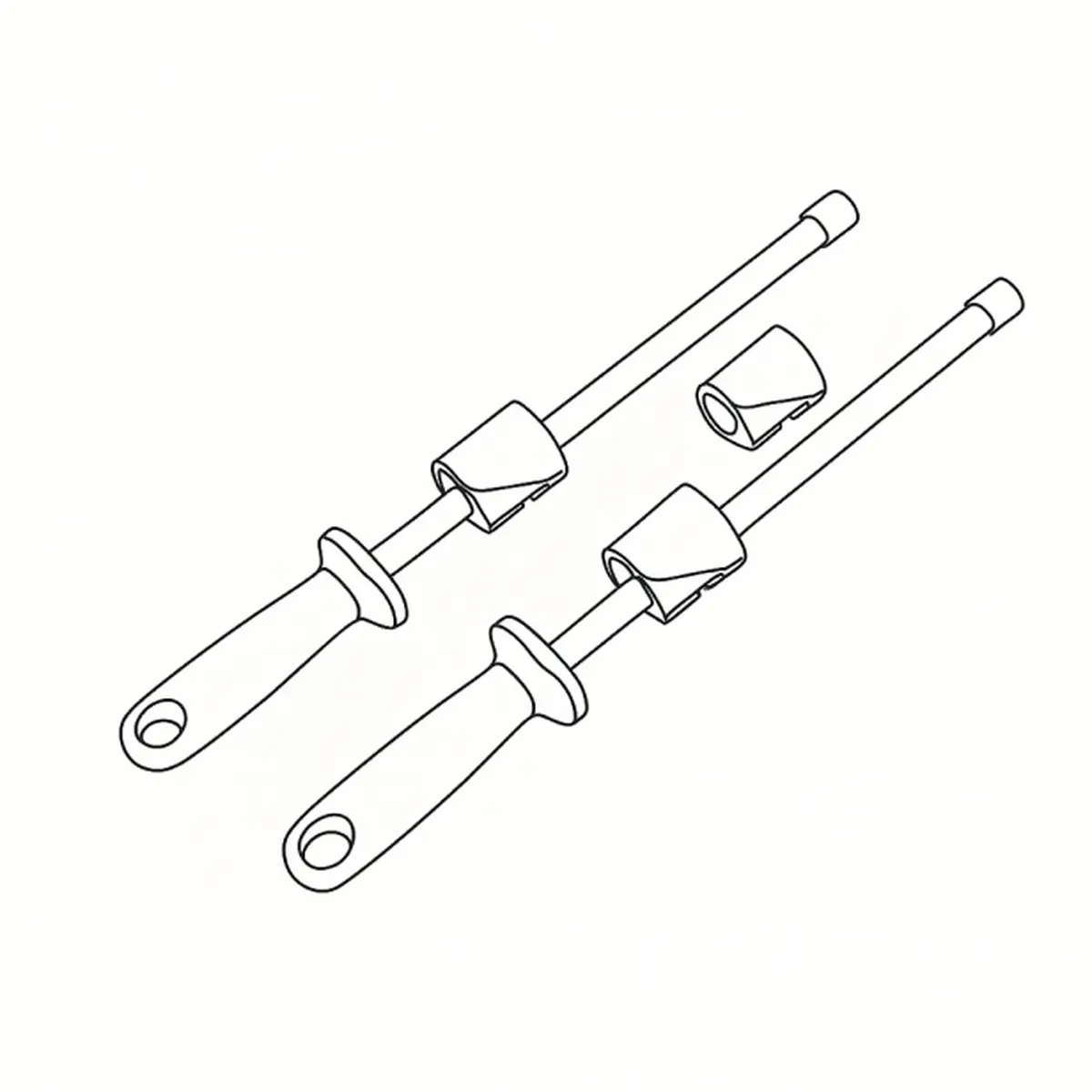
A commonly used tool in professional kitchens. Since sharpening rods vary greatly depending on the materials they are made from, they should be divided into several categories:
Metal rods are designed for soft steel knives. They do not significantly sharpen the knife but instead realign the cutting edge, helping it cut effectively for a certain period of time.
Diamond rods are aggressive and can damage the edge by tearing it up, causing knives to dull quickly. They can also damage hard steel knives, as microcracks may form, leading to chipping.
Ceramic
Coarse ceramic rods are designed for sharpening heavily dulled knives. They sharpen quickly and, as the name suggests, coarsely. They are well suited for sharpening and maintaining knives made of soft steel. After using a coarse ceramic rod, the knife will cut very aggressively; however, it will not retain its sharpness for long.
Fine ceramic rods sharpen slowly and gently. They are an excellent tool for maintaining a knife’s sharpness or for honing after sharpening on a coarse rod.
The main problem is that, as with whetstones, maintaining a consistent sharpening angle requires a certain level of skill.
Pros:
- Wide variety of types (metal, diamond-coated, ceramic) for different tasks
- Designed for knife maintenance, helping extend the time between sharpenings.
- Metal rods effectively realign the edge, extending cutting performance
- Coarse ceramic rods can restore dull knives
- Fine ceramic rods are excellent for maintaining and refining sharpness
Cons:
- Requires skill to maintain a consistent sharpening angle
- Metal rods do not significantly sharpen, only realign the edge
- Diamond rods are aggressive and can damage the edge or cause chipping
- Diamond rods produce a rough edge with limited edge retention
Brief comparison with the WAVE sharpener
Although the WAVE sharpener is based on a ceramic rod, its angle-guiding mechanism fundamentally changes the sharpening process, allowing not only edge maintenance but also sharpening the knife at the desired angle.
Why Choose the WAVE Sharpener?
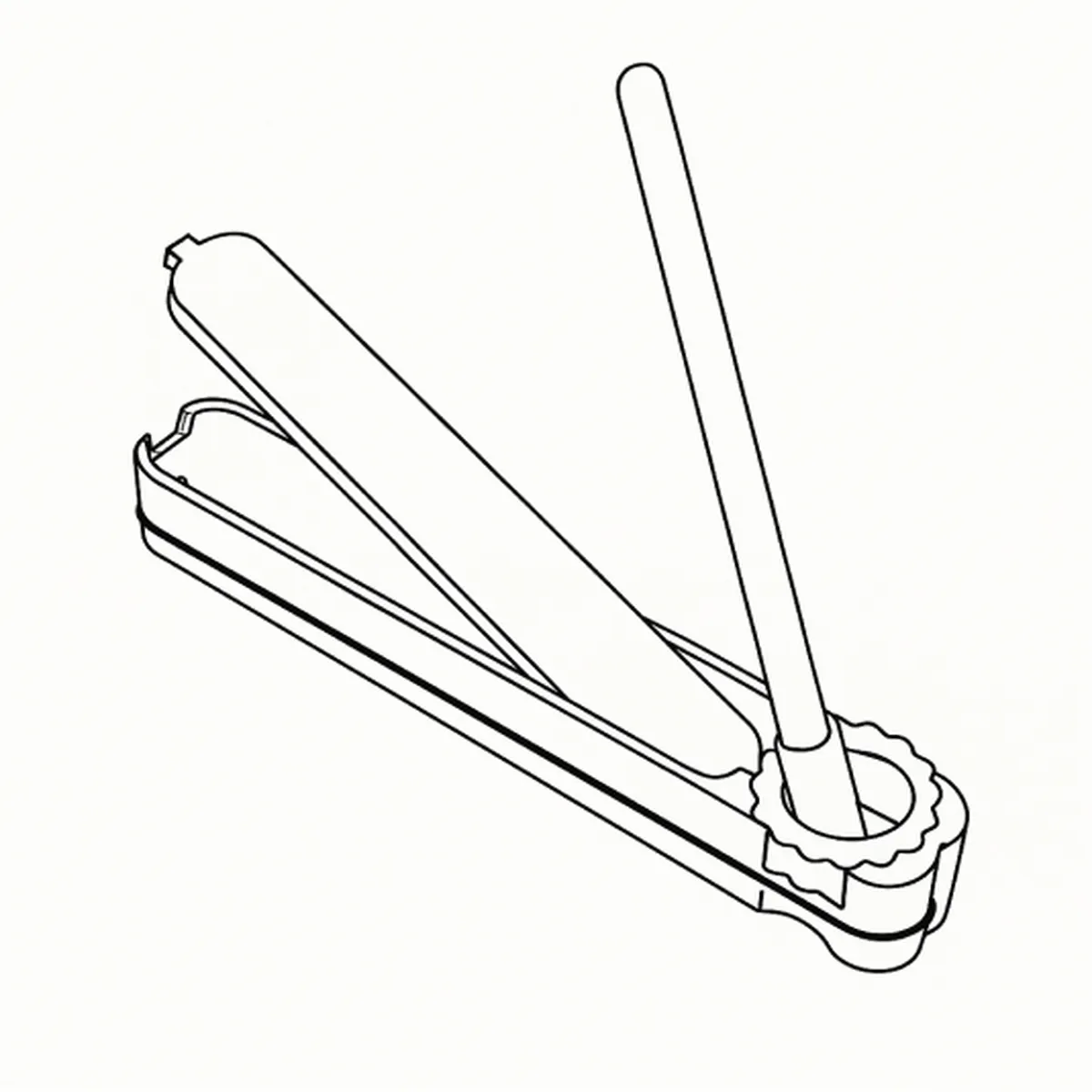
The WAVE sharpener is not only easy to use – it also makes it easy to keep your knife consistently sharp. Its main advantage is that maintaining your knives requires only a few minutes per month, while allowing you to enjoy the performance of a very sharp knife every day.
WAVE is an excellent tool for honing a knife at the desired angle. And when honing is no longer enough, it also allows you to quickly form a new cutting edge.
As a result, your knives will last much longer than they would if they were maintained less frequently and therefore required full resharpening more often.
What is the difference between WAVE Professional and WAVE Premium?
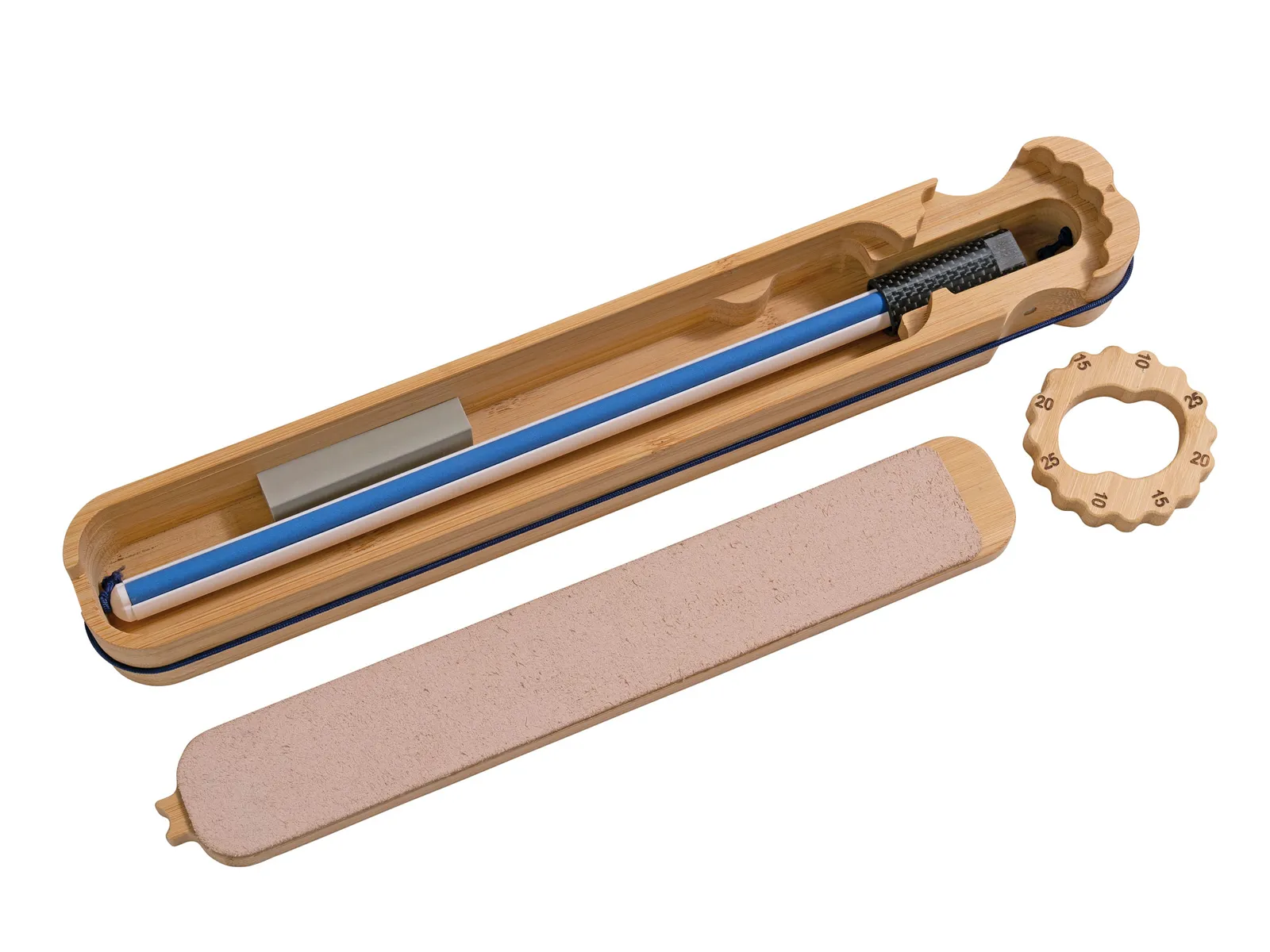
WAVE Professional was designed for inexpensive knives and professional kitchens, where the goal is to quickly restore knives that dull relatively fast. It uses a fairly coarse 800-grit rod, which allows damage on the cutting edge to be removed very quickly in just a few passes.
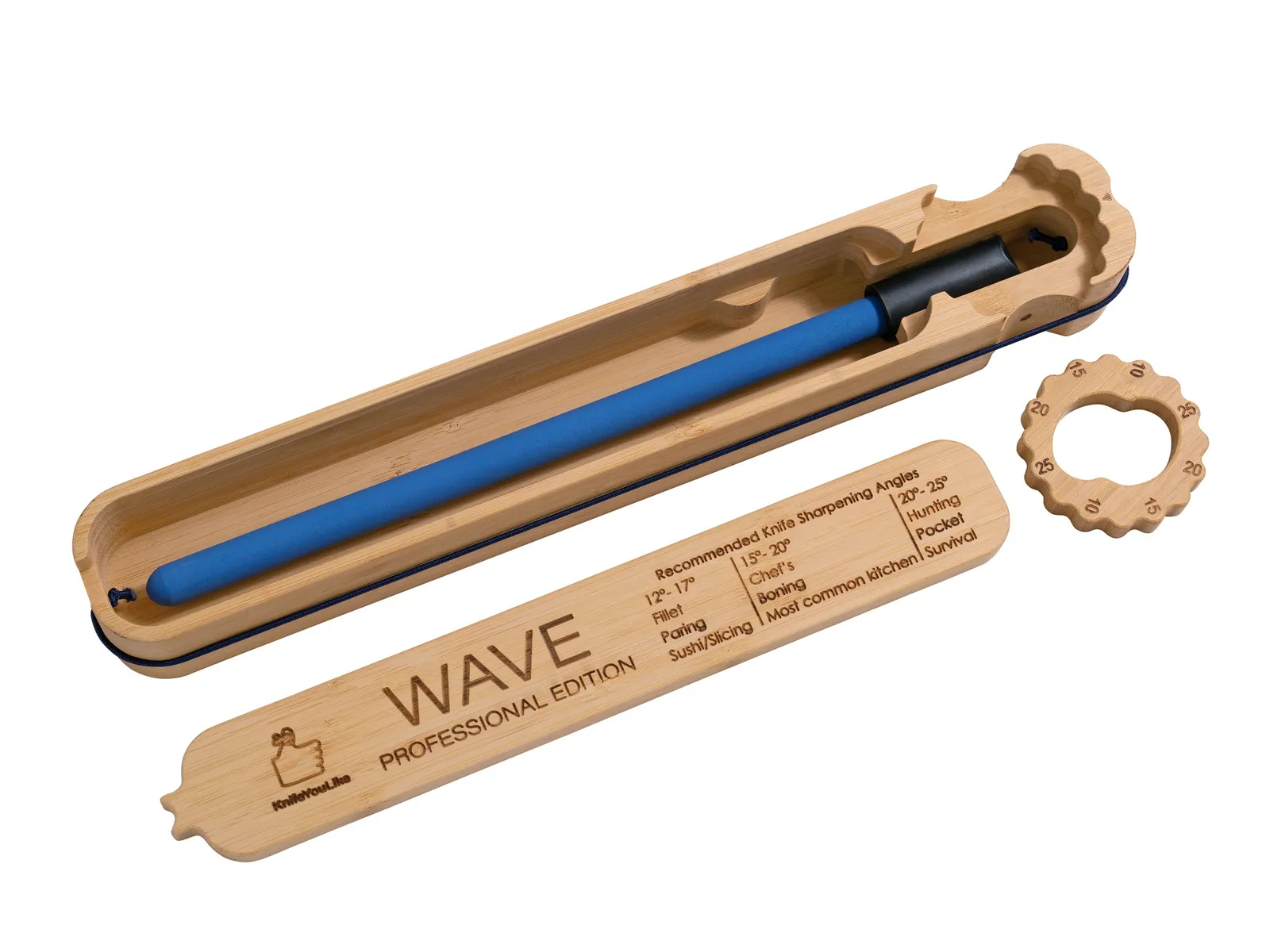
WAVE Premium is designed for more expensive knives and users who want a higher level of sharpness and edge refinement. It features a dual-grit rod: a coarse 800-grit side for sharpening and edge repair, and a fine 3000-grit side for honing and refining the edge.
WAVE Premium also includes a leather strop, which allows the knife to be refined to razor-level sharpness.
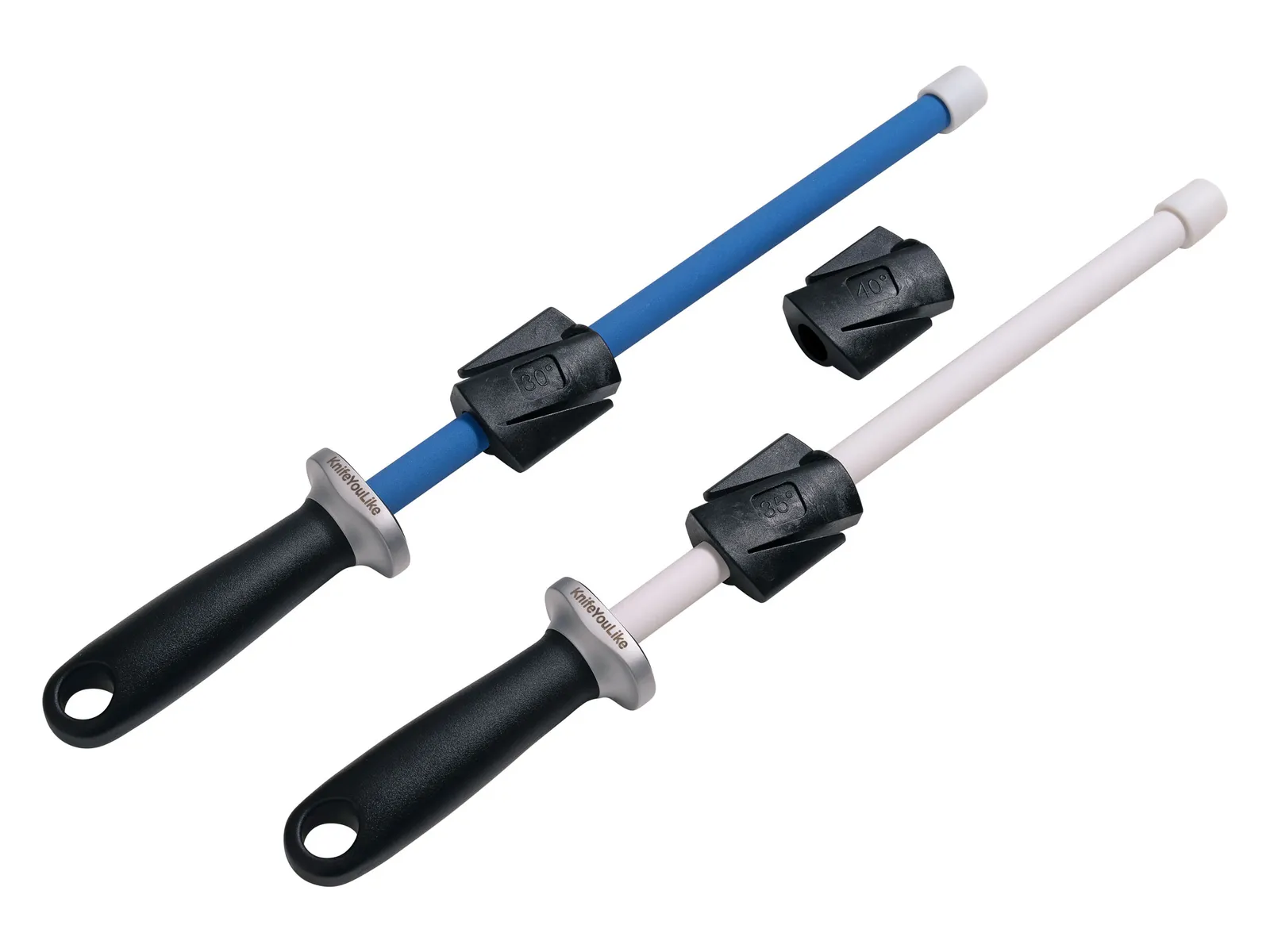
What are the advantages of Guided Rods ?
Because the guide stabilizes the blade during sharpening, this system works especially well for knives with very flexible blades, such as fillet knives. The guide supports the spine of the knife along the entire length of the blade, helping maintain a consistent angle and improving control during sharpening.
At the same time, it is important to understand that the guide is designed for a specific type of knife – mainly kitchen knives with blade thicknesses up to 3 mm and relatively flat grinds. For this reason, it is not as versatile as the WAVE sharpener.
Japanese Knives
Sharpening Japanese knives
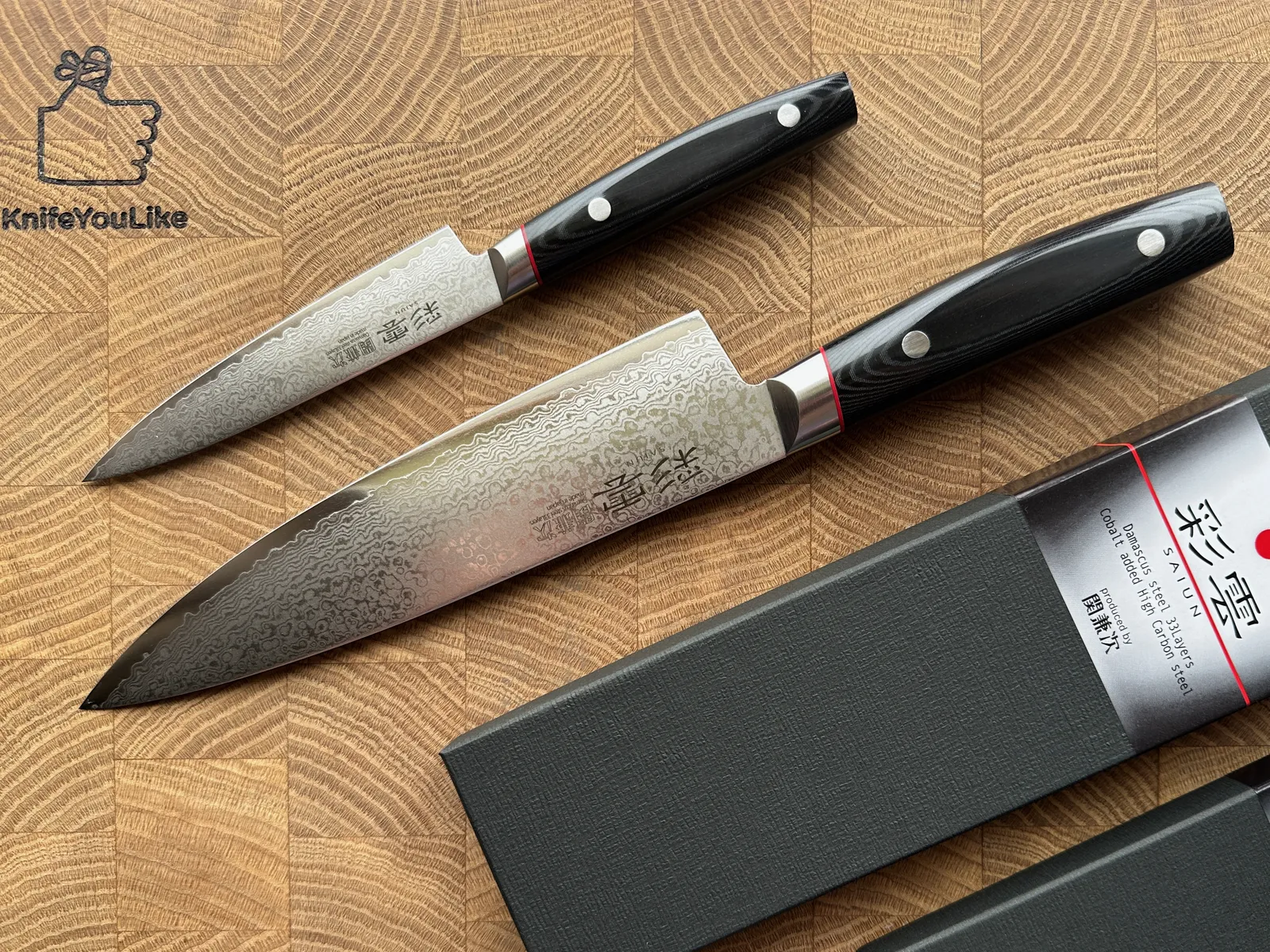
Japanese knives made in a Western style (gyuto, santoku, utility) can also be sharpened effectively using sharpeners that allow sufficiently acute sharpening angles.
Sharpening Japanese knives often differs from sharpening European knives because the knives themselves are designed differently. Japanese chef’s knives are commonly made from harder steel and feature thinner edge geometry, which allows them to achieve a very high level of sharpness. Because of this, finer abrasives are generally preferred during the finishing stages of sharpening.
Sharpening stones and ceramic rods are suitable for sharpening Japanese knives. Because their cutting edge is quite fine, a coarse ceramic rod can quickly sharpen the knife, while a fine ceramic rod provides a sufficient finish.
Japanese vs Western sharpening angles
Because Japanese knives are often made from higher-quality steel with harder heat treatment, they can usually be sharpened at lower angles than European knives. Therefore, depending on the intended use of the knife, you can generally choose lower angle values from the table of recommended sharpening angles for different types of knives.
Traditional Japanese knives geometry
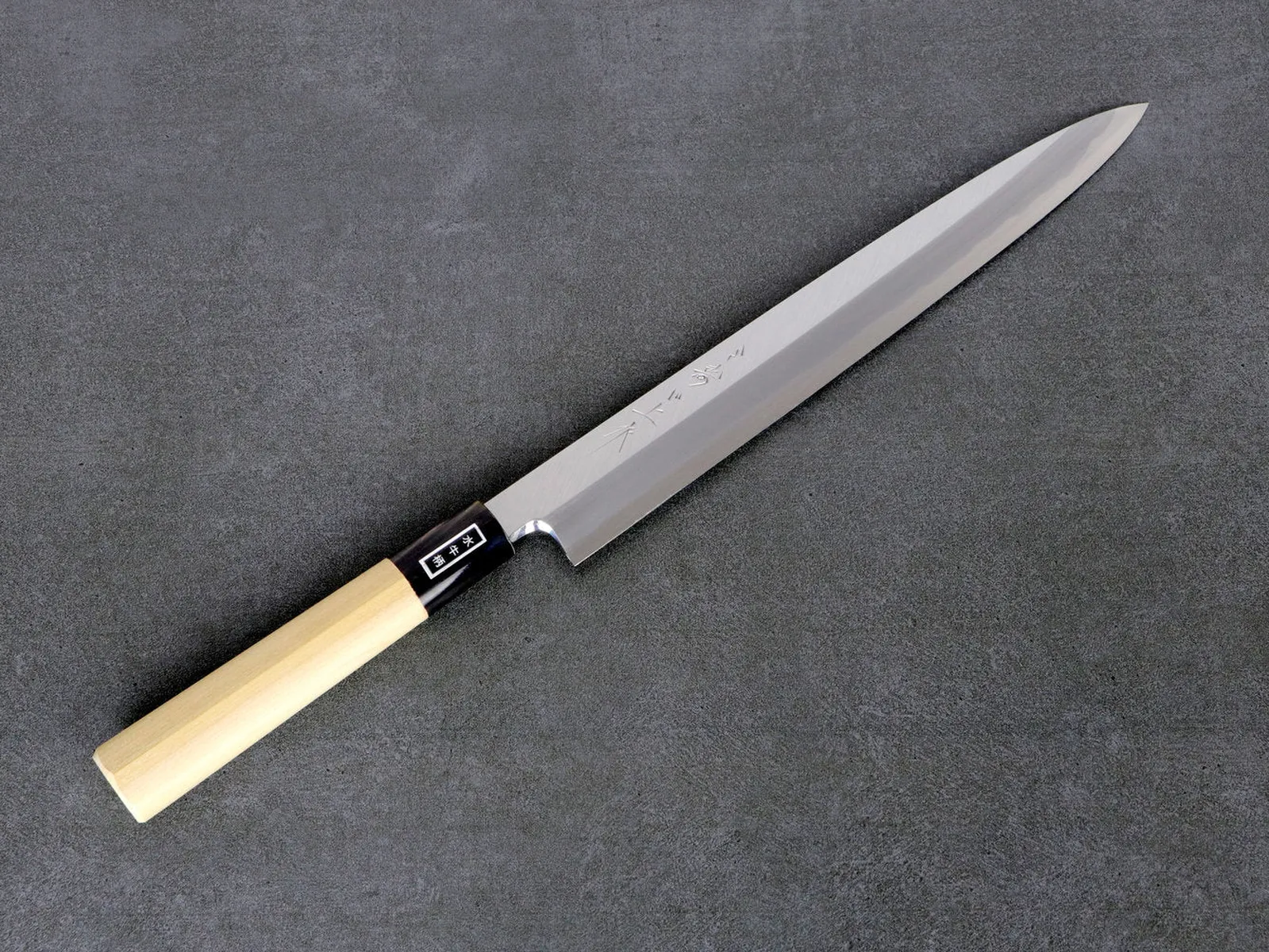
Traditional Japanese knives should be considered separately, as they feature a unique geometry (Kataba+Urasuki): a bevel on only one side (Kataba) and a concave surface on the other side, known as Urasuki. These knives are sharpened on the beveled side at the required angle, while the urasuki side is laid flat on the stone for burr removal and final polishing. For this reason, whetstones are generally the most suitable tool for sharpening traditional Japanese knives.
Common Mistakes
Most common sharpening mistakes
- Incorrect sharpening angle selection. The choice of sharpening angle depends on the intended use of the knife, which is why manufacturers usually set an appropriate angle from the factory. For quick sharpening, it is generally best to match the existing angle unless you intentionally want to change it for a specific reason. If you choose an angle that is too low, you will need to remove a much larger amount of steel. On the other hand, if the sharpening angle is too high, the knife’s cutting performance will decrease.
- Failing to form a burr along the entire length of the edge when creating a new cutting edge. This means that some sections of the edge remain unsharpened.
- Failure to fully remove the burr after forming the cutting edge. To achieve truly good sharpness and long edge retention, the burr must be removed. This is often caused by excessive pressure or by not alternating sides frequently enough during sharpening. It is recommended to switch sides continuously while gradually reducing pressure down to the lightest possible contact.
- Choosing the wrong abrasive. If the knife is heavily dull, a coarse abrasive will be required, and a fine abrasive simply will not be effective enough. At the same time, if your knife is only slightly dull, there is no need to fully resharpen it. In this case, the edge only needs honing using a fine abrasive and light pressure.
- Choosing the wrong sharpener. For example – cheap pull-through sharpeners are usually designed for inexpensive knives, so using one on a high-quality Japanese knife is more likely to damage the knife than sharpen it properly. The choice of sharpener should be based on the type of knives you plan to sharpen and the level of sharpness you want to achieve.
- Removing too much steel during sharpening (over-sharpening). When sharpening a knife, only enough steel should be removed to restore sharpness and form a burr. Removing more than necessary will thicken the cutting edge and reduce the knife’s cutting performance.
- Rounding the cutting edge during stropping. If you use stropping as the final stage of sharpening and edge polishing – especially when using a strop with an abrasive compound – it is very important to maintain the correct angle and avoid excessive pressure. Because leather compresses under pressure, both an incorrect angle and too much force can round the cutting edge and reduce the knife’s cutting performance.
- Over-honing during stropping.
When using an abrasive compound on leather, it is important to avoid over-polishing the edge. If the cutting edge becomes excessively polished, it may lose some of its ability to bite into slippery materials.
Ready to keep your knives sharp with minimal effort?
Learn more about Wave Professional and Wave Premium and choose the sharpening system that best fits your needs.
Frequently Asked Questions (FAQ)
What is the difference between sharpening and honing?
Sharpening creates a new cutting edge by removing steel from the blade. Honing is used to maintain or refine an existing edge and remove minor damage before full sharpening becomes necessary.
How often should I hone my knife?
For most home users, a quality knife only needs honing about once a month or even less often. Knives made from softer steels may require honing every few weeks, depending on use.
How do I know if my knife needs honing?
A knife that still cuts but has lost some sharpness can usually be restored by honing. Common signs include reduced cutting performance, difficulty cutting paper cleanly, or small bright spots visible on the edge.
How do I know if my knife needs sharpening?
If the knife slides on tomato skin, tears paper instead of cutting it, or has visible edge damage that cannot be corrected by honing, it is time for full sharpening.
What is a burr and why is it important?
A burr is a thin fold of steel that forms when the abrasive reaches the apex of the cutting edge. Forming a burr along the entire edge confirms that the knife has been fully sharpened.
How do I remove a burr?
The most effective method is to alternate sides with each sharpening stroke while gradually reducing pressure. A fine abrasive or leather strop can also help remove remaining micro burrs.
What sharpening angle should I use?
The correct angle depends on the knife and its intended use. Most European kitchen knives are sharpened between 15° and 20° per side, while harder Japanese knives are often sharpened between 12° and 15° per side.
How can I match the existing sharpening angle of my knife?
A simple method is to color the edge bevel with a marker and make a few sharpening passes. The areas where the marker is removed show whether the selected angle matches the existing edge geometry.
How do I choose the right knife sharpener?
The best sharpener depends on the knives you own, the level of sharpness you want to achieve, and how much time you are willing to spend sharpening. Factors such as blade geometry, steel type, portability, ease of use, and sharpening precision should all be considered.
Are pull-through sharpeners bad for knives?
Pull-through sharpeners can work reasonably well on inexpensive soft-steel knives, but they often remove excessive material and may damage thin or high-quality blades. They also tend to produce poorer edge retention than more controlled sharpening methods.